Saturday, July 13, 2013

Yankees limp to All-Star break after dismal first half

The Yankees are not used to being second best. They don’t like it – and they don’t particularly play the role well. So their current home just above the American League East cellar has to be disappointing to both players and management.

Going into the All-Star break, the Yankees are barely treading water (six games out of first place) and dealing with a parade of injuries. Both Alex Rodriguez and Captain Derek Jeter, their two biggest names, haven’t contributed to the team at all in recent months.

Mark Teixeira, Curtis Granderson and Francisco Cervelli are also out with significant injuries. There just aren’t enough standouts on the roster to fill their cleats adequately and keep this team in contention for a playoff berth. 

Jeter’s much-heralded return to the lineup came Thursday after rehabbing his broken left ankle through the first 91 games of the season. Unfortunately, he had to be pulled late in the game due to quad tightness. He was expected to undergo an MRI on Friday to determine if he can continue his comeback.

Jeter can be a potent weapon if he stays in good health. He blasted a single Thursday on the first pitch he faced this season and later scored a run. He also notched his first RBI this season on a ground out. Even going 1-4 on the day, he helped his team stop a three-game losing streak with an 8-4 win over the Royals Thursday.

Meanwhile, Rodriguez, who is six games into a 20-day rehab assignment with the Tampa Yankees minor league team, could be destined for a potential 100-game suspension related to his involvement with a Florida clinic tied to a major PED investigation.

A-Rod is trying to come back from hip surgery, and his outrageous salary structure has been a bone of contention for team management. Though GM Brian Cashman has yet to openly admit the signing was a huge mistake, Yankees brass (and a growing number of fans who buy New York Yankees tickets) seem to regret locking up the aging slugger for so long.

The Yankees will have a tough time catching the Red Sox for the divisional crown – or even lock down a wild card playoff spot – without a major miracle. That could come in the form of some blockbuster trades, but even a few bold moves might not be enough. It might take a complete collapse by the teams above them, and maybe a few key injuries hitting their competitors as the Yanks finally get healthy.

Tampa Bay and Baltimore are playing excellent baseball this year and could gain even more separation from the Yankees in the second half if nothing changes.

Unlike the surging, offensively stacked Red Sox, the Yankees’ main strength is their pitching corps. But even that crew only breaks the top 10 in ERA (3.79).

On the flip side, they rank 23rd in quality starts. Closer Mariano Rivera is doing well in his final year before retirement with 29 saves, and the team’s starters are doing the best they can without the biggest bats on the team available to provide some decent run support. C.C. Sabathia has 9 wins and 112 strikeouts to his credit, while Hiroki Kuroda leads the team in ERA (2.77) – despite a lackluster 7-6 record on 18 starts so far.

The main issue with this year’s squad is the anemic offense. Their highest ranking category is runs, where they are 19th in the league. Robinson Cano is simply carrying the team with a .299 batting average, 21 home runs, 62 RBIs, and 53 runs scored. 

The Yankees always seem to be in the trade deadline mix every year, but this time they will have to produce some serious magic. They’ll have to find a way to shore up their pitching and their batting with some players who can become immediate contributors.

There may not be enough high-caliber bats and arms available to give them what they need, though. Yankees fans might just have to get used to watching their team struggle to stay out of last place for the remainder of the season.

- Rich Bergeron

Thursday, July 11, 2013

Darren Daulton's legacy lives on through his many stories

Darren Daulton, the longtime catcher for the Philadelphia Phillies has been diagnosed glioblastoma, the same aggressive brain cancer that took the life of fellow major league catcher and Hall of Famer, Gary Carter.

Darren Daulton Autograph / Baseball-Almanac.com

He also earned the reputation as one of baseball's best storytellers, as evident by this video where he tells an entertaining behind the scenes tale from the 1993 Phillies including teammates John Kruk and Jim Eisenreich.


Sunday, July 7, 2013

A literary tribute to Satchel Paige

In celebration of Satchel Paige's July 7, 1906 birthday, I offer a literary journey into the life of Satchel Paige. An eccentric character on and off the field, chronicling his career has spawned many books including two that he co-wrote.


Below are some of the best books that showcase the life and times of Paige.


Saturday, July 6, 2013

Milwaukee Brave Denis Menke recalls the greatest game ever pitched 50 years later

On July 2nd, 1963, a 42-year-old Warren Spahn of the Milwaukee Braves squared off against the 25-year-old Juan Marichal of the San Francisco Giants in a duel for the ages. Sixteen innings later, the game ended with one of the future Hall of Famers on the mound watching the flight of a home run by another legend carry off into exile. What transpired in between those 16 innings makes this matchup one that many experts argue is the greatest game ever pitched.

Denis Menke, just a few weeks shy of his 23rd birthday, was a promising infielder for the Braves learning under the tutelage of veterans such as Frank Bolling, Roy McMillan, and Hall of Famer Eddie Mathews. Menke started that game on the bench, but was unexpectedly tapped by manager Bobby Bragan to enter the game in the fourth inning.
Denis Menke - 1963 Topps
 
"Eddie [Mathews] got hurt, that's the only reason he came out of that game," the 72-year-old Menke said Tuesday evening from his home in Tarpon Springs, Florida.

Menke spent the remaining 12 innings of the game at third base, cementing his place in the legendary contest.

"It was just amazing, the people that were involved in that game, it was really something," he said. "You think about it now all of the Hall of Famers that were in that game." (There were seven future Hall of Famers that participated in that game, and an eighth in Gaylord Perry in the bullpen for the Giants.)

He managed two hits off of the stingy Marichal, who struck out ten Braves hitters that day. Despite the Dominican pitcher's dominance, Menke felt comfortable in the box.

"I didn't mind facing Marichal because I knew he was always going to be around the plate," he said. "He was going to give you a pitch to hit, what you did with it was up to you. He could throw a strike from any position, sidearm, overhand, three-quarters ... any pitch! That was what was amazing about him."

Maybe even more impressive than Marichal's efforts was the performance of Spahn at that stage in his career. At 42, he was a year older than the Giants manager Alvin Dark and still excelling at his craft.

"With Spahnie, I don't think he ever thought his age came into play," Menke said. "He was such a competitor and he just enjoyed the competition. I think that's one reason why he just kept on going. He had one of those great arms that could keep on throwing. His motion was so good. It was just one of those things you had to marvel at."

As each team put up zeroes, it became an increasing battle of wits between the two mounds men. Neither man wanted to leave the game. Pitch counts be damned, their pride was a bigger issue.

"You look at Marichal on the other end that was 25-years-old. He wasn't going to let a 42-year-old man to show him up. He wasn't going to come out of that game," Menke said.

The Braves had a scare in the 9th inning when Willie McCovey hit a towering fly ball down the left field line. Menke, who was playing third base, took a long look at it and couldn't tell whether the ball was fair or foul.

"McCovey in the 9th inning hit one just foul," Menke said. "Nobody knows if it was really foul. In Candlestick, they way the wind blew, McCovey hit 'em so high, it was hard to tell if it was fair or foul. I was on the third base side and they asked me if I could tell and I said, 'Nope.' For our sake, the umpire made the right call."

Both teams barely reached base in the extra frames until the 14th inning when an error by Menke loaded the bases for the Giants. Spahn extinguished that fire by getting catcher Ed Bailey to hit a pop-up to center field, but when Willie Mays stepped to the plate in the 16th, it was 1951 all over again. Mays garnered his first major league hit, a home run off of Spahn in 1951.

The Giants center fielder wasted no time this at-bat, and hit Spahn's first offering over the left-field fence for a home run. Spahn said it was a screwball that, "didn't break worth a damn." Finally after four hours, the game was over.

Spahn finished the year 23-7, tying his 1953 for his best season ever. It would also be his last effective run in the majors. He would pitch two more years in the major leagues, posting marks of well under .500 for the Braves, New York Mets and ironically the Giants. Marichal ended 1963 with a 25-8 record, starting a string of four consecutive 20-win seasons. The two would combine for 606 career victories, earning them both enshrinement in Cooperstown.

A half-century later, this particular contest left an indelible mark on Menke, an incredible feat for someone who spent 40 years as a player, coach, and minor league manager.

"I give those two pitchers a lot of credit because I don't think we'll ever see a game like that again."


Sunday, June 23, 2013

John Franco helping to raise funds for the Fisher House Foundation

Fisher House Foundation Director of Donations Andrew Kayton (far left), joined by Mets great John Franco alongside Wounded Warrior folks / Citi

New York Mets Hall of Fame closer John Franco appeared at Citi Field last Tuesday for a charity softball game that raised money for the Fisher House Foundation, an organization that builds houses at VA hospitals and military medical facilities that families can stay at when they have loved ones in the hospital.

Currently there are 61 Fisher Houses in operation at every major military medical facility. They support over 20,000 families every year saving them more than $30 million dollars in lodging costs, food, and transportation. No family ever pays to stay at a Fisher House because the foundation picks up the bill that the military would normally charge a family to stay at a Fisher House.

This year’s game raised over $20,000 to support military families, and will provide over 200 nights of lodging at a “home away from home,” for the brave men and women of the United States military and their families.

Wednesday, June 19, 2013

Lou Brissie - A soldier's courageous journey to take the mound

Lou Brissie is an exemplary measure of courage, strength and perseverance. Just as he graduated from Ware Shoals High School in 1941, Brissie signed with the Philadelphia Athletics on the condition he would join the club after finishing three years at Presbyterian College.


The Athletics were ready to bring Brissie to spring training in 1943, but the draw of representing his country was too strong, as Brissie enlisted in December 1942.

To call Brissie's experience in the war remarkable would be an understatement. Life changed drastically for Brissie on December 7, 1944. While serving in Italy, an artillery shell exploded on his squad leaving him for dead with his left leg tattered from the explosion. Doctors wanted to amputate, but Brissie pleaded with them to save his injured appendage.

Dr. Wilbur Brubaker believed he could repair Brissie's leg, and after 23 surgeries, he was able to return to the field in 1947. Connie Mack held a spot for the left-hander through his recovery, encouraging him every step along the way.

Wearing a heavy brace on his weakened leg, Brissie battled through pain filled nights trying to find the strength that made him a fireballing prospect. Mack rewarded him with a late-season appearance in 1947 with the Philadelphia Athletics after posting a 23-5 record with Class A Savannah. He spent the next six seasons in the major leagues, making the 1949 American League All-Star team en route to a 44-48 career record.

Every time Brissie took the field, he brought hope and inspiration to the veterans recovering from injuries even more devastating than what he faced. His career became a shining example of the resiliency of Americans in the face of extreme adversity.

Some sixty years later, Brissie went through the arduous task of reliving the details of his war experiences in his 2009 autobiography, "The Corporal Was a Pitcher." The book is a must read not only for all baseball fans, but those who are interested in discovering a first-person experience illuminating the true meaning of the American spirit.


Tuesday, May 28, 2013

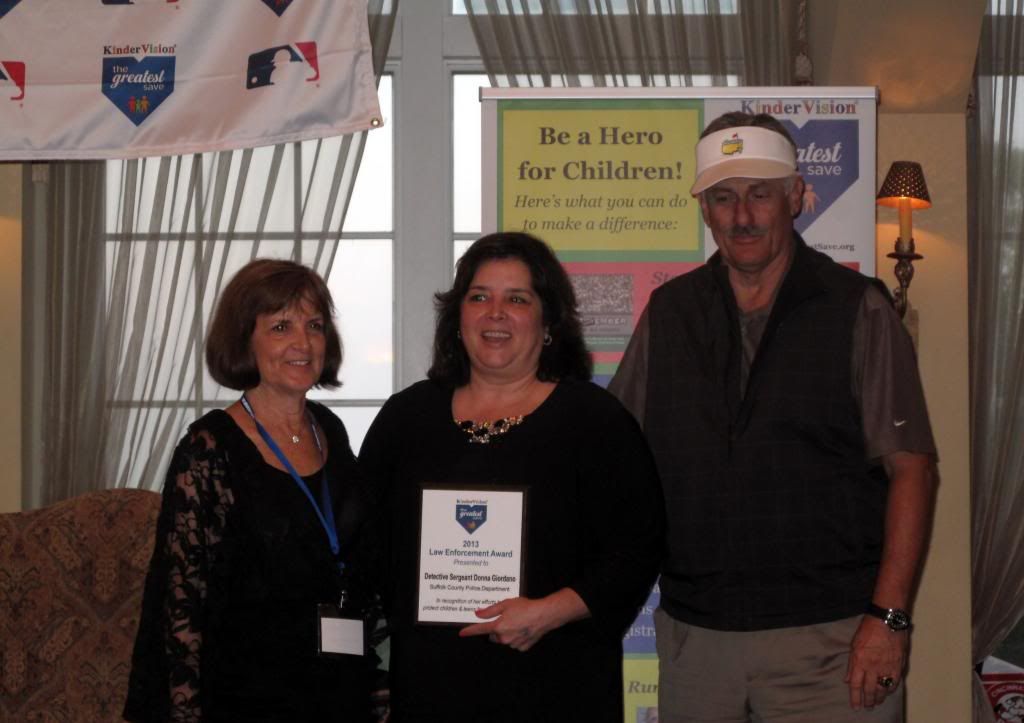
Hall of Famer Rollie Fingers helps to save New York area youth from child predators

Rollie Fingers presents award at Greatest Save dinner
The world-renown golf courses at Bethpage attract thousands of enthusiasts each year looking to tackle one of the sport’s most ferocious challenges. On Monday May 20, a few hundred devotees gathered there to support a more pressing issue, educating youth about the dangers of child predators.

Headed by the efforts of KinderVision founder Doug Sebastian and national spokesperson, Hall of Famer Rollie Fingers, The Greatest Save was able to make a profound impact on Long Island. All proceeds from the golf tournament and auction went back to local municipalities to further education and prevention programs.

Click here to read more about The Greatest Save's efforts in New York and its impact on the local area.

Sunday, May 26, 2013

Share your memories of John 'Mule' Miles, Negro League star

John "Mule" Miles, a power hitting outfielder / third baseman for the Chicago American Giants of the Negro Leagues, passed away on Friday May 24, 2013 at the age of 90. Miles played three seasons in the Negro Leagues from 1946-48, and set a record of hitting home runs in 11 straight games.

John "Mule" Miles
In recent years, Miles was a very popular figure with baseball fans, exchanging letters filled with inspirational phrases like the one below to those that sought his signature. It is no surprise that he entitled his autobiography, "A Legacy to Leave Our Youth."

Pictured below is a note from Miles after writing to him in 2006.
"Winning is not by luck, it is how you play the game."
Share your memories of Mr. Miles below, or your favorite words of wisdom that you received in your correspondence with him.


Thursday, May 23, 2013

Cot Deal, 90, pitched for the Red Sox and Cardinals

Ellis "Cot" Deal, who spent 50 years in professional baseball as a pitcher for the Boston Red Sox and the St. Louis Cardinals, as well as a coach for numerous organizations, passed away Tuesday May 21, 2013. He was 90.
Cot Deal 1954 Topps Archives / Baseball-Almanac.com

Deal's career is expertly detailed by SABR member Patrick Doyle in his SABR biography.

Doyle's research on Deal's career also appears in the book, "Spahn, Sain, and Teddy Ballgame: Boston's (almost) Perfect Baseball Summer of 1948."

Sunday, May 12, 2013

Joe McEwing receives nod for 2013 Irish-American Baseball Hall of Fame class

"Super" Joe McEwing, the current Chicago White Sox third base coach, and former utility man who played primarily for the New York Mets, was inducted into the Irish-American Baseball Hall of Fame last week in New York City.

McEwing joined a class that included former Met Rusty Staub; Peter O'Malley, owner of the Los Angeles Dodgers; Bill Madden, writer for the New York Daily News; and Boston Globe columnist Dan Shaughnessy.


Friday, May 3, 2013

Autograph signings a family affair for Potter

Bret Boone / Chris Potter
Baseball possesses a magical power to connect young and old through the history of the game. Passed down from father to son, these shared tales of the legends of yesteryear keep players from decades past relevant today. With the pictures of their youth immortalized on pieces of cardboard, collecting memorabilia has been one such way for families to share in the baseball tradition.

Chris Potter is a specialist at bridging fans with these cardboard heroes, navigating the back roads of the United States to conduct autograph signings with retired baseball players. Potter’s clients range from those whose careers amounted to a "cup of coffee," to those who have reached the baseball's pinnacle, the Hall of Fame. His next round of travels begins on May 10, 2013 and will include a special partner in these cross country expeditions, his father.

“My father just retired from being a police officer of 40 years. He’s coming out with me for this trip and I couldn’t be more excited for him to come along. He’s going to spend the next month with me on the road,” said Potter from his offices in Maryland.

Potter believes having his father around for these series of visits are the residue of baseball’s ability to bond father and son.

“The reason why it’s America’s pastime is because it’s been passed down from generation to generation,” he said.

A few of the players Potter will be conducting signings with have made baseball the family business. Bret Boone, a three-time All-Star, was a third generation major leaguer. His father Bob enjoyed a 19-year major league career as a catcher, and grandfather Ray won a World Series with the 1948 Cleveland Indians. Vernon Law, the 1960 Cy Young Award winner, nurtured his son Vance to follow his major league footprint.

Also in this round of Potter’s signings that includes 90 former major league players, are well known veterans such as Rollie Fingers, Vida Blue, and Jack McDowell, as well as baseball obscurities such as Drungo Hazewood, whose career lasted an ever so short five plate appearances.

With the many names that Potter will be encountering, there is a father somewhere that will have a tale crystallizing the moment they saw one of these ballplayers on a good day. An autograph on a treasured baseball card or photo will further the conversation. Hopefully for Potter, he’ll get a few of these yarns spun his way by his traveling companion on this round of signings.

Monday, April 22, 2013

Kevin McReynolds revisits the Mets NL East championship team twenty-five years later

Kevin McReynolds figured prominently in the New York Mets' quest for the National League pennant in 1988. The 28-year-old left fielder was in his second season with the Mets after a trade in December 1986 brought him to New York in exchange for Shawn Abner, Stan Jefferson, and Kevin Mitchell. Coming to the Mets fresh off of their World Series victory, he had lofty expectations for his time in Flushing.

Kevin McReynolds / N. Diunte
“You had high hopes with a team that strong,” said McReynolds during an appearance at a baseball card show at Hofstra University this Saturday. “[They] had great pitching at the time. You think it was going to be … almost like a dynasty in the making. You look back now; of course it didn’t turn out to be that. It was always an interesting team and [there was] a lot of good baseball too.”

McReynolds, who was known for his private nature off the field, came out in a major way in 1988, finishing third in the MVP voting behind teammate Darryl Strawberry and the Kirk Gibson of the Los Angeles Dodgers. He blasted 27 home runs, drove in 99 runs, and set the single-season record for the most stolen bases without a single caught stealing, going a perfect 21-21.

“They just saw a fat ol’ white boy over there, so they didn’t pay attention to me,” McReynolds joked. “As long as I didn’t run in situations where I could hurt us with an out … they gave me the green light.”

The Mets faced off with the Dodgers in an unforgettable National League Championship Series, with the Mets taking the first two of the three games. During Game 4, McReynolds launched a fourth inning home run to put the Mets up 3-2. Going in to the ninth inning leading 4-2 with Dwight Gooden on the mound, Mets fans felt confident that the potential for a series clinching Game 5 would take place at Shea Stadium; however, Dodgers’ catcher Mike Scioscia had plans otherwise.

After a leadoff walk in the top of the ninth inning, Scioscia blasted a home run to right field to tie the game, hushing the boisterous Shea Stadium crowd. The two teams battled in extra innings, until Gibson homered off of Roger McDowell in the top of the 12th to put the Dodgers in front 5-4. The Mets would not go quietly, as they put the first two batters on base with consecutive singles off of Dodgers reliever Tim Leary, forcing manager Tommy Lasorda to bring in ex-Met Jesse Orosco. The lefty specialist walked Keith Hernandez and recorded the second out of the inning when Strawberry popped up to second base.

Just as McReynolds approached the plate with the bases loaded, Lasorda summoned Orel Hershiser, who pitched seven innings in the Dodgers' loss the night before. He encountered a pitcher in Hershiser who refused to give in. He flew out to center field ending the four-and-a-half hour marathon.

“I ended up making the final out," he said. "We had beaten LA so many times during that year, but Hershiser was on that phenomenal streak at the time. You always hate to be the last guy to make the last out, but unfortunately someone has to win and someone has to lose.”

The Mets lost Game 5 at Shea Stadium, but forced the deciding game in Los Angeles when David Cone pitched a complete game 5-1 victory aided by a McReynolds home run. Hershiser was too much for the Mets to handle in Game 7 and the Dodgers advanced to the World Series, which they won in convincing fashion over the Oakland Athletics.

McReynolds played with the Mets through 1991 when he was traded to the Kansas City Royals as part of the Bret Saberhagen deal. He played two seasons in Kansas City until the Mets reacquired him in 1994 in exchange for Vince Coleman. He played half of the 1994 season before knee injuries ended his baseball career.

Spending the bulk of his major league career in New York, McReynolds said the fans captured his attention while playing in Queens.

“There were always a lot of fans, [but] they weren’t always fans for you at times," he said. "They were always very verbal and they [expected] a good product on the field. [The fans] were just one of the things to look forward to.”

The 53-year-old McReynolds lives in Little Rock Arkansas, and when he is not playing golf, he is pursuing a wide range of business interests.

“I play golf a lot, run a commercial duck hunting operation during the winter time, and a couple of friends and I own some pizza restaurants in Memphis.”


Friday, April 12, 2013

Bronx native Larry Miggins recalls Jackie Robinson's first day in the minor leagues

Jackie Robinson’s impact on baseball was felt immediately the moment he stepped on the field for the Montreal Royals in their season opener against the Jersey City Giants on April 18, 1946. In addition to all of the social implications behind Robinson’s debut, his 4-for-5 performance that included a home run, two bunt singles, and two runs scored by causing Jersey City’s pitchers to balk, left an indelible mark on his opposition.

Larry Miggins’ view of Robinson’s eye opening performance remains vivid some sixty-seven years later. The 20-year-old Bronx, New York native manned third base for Jersey City that day and had no trouble recalling how the day’s events unfolded.

“I remember it well,” the 87-year-old Miggins said from his home in Houston, Texas. “It was a full house, 45,000 fans. The place was packed.”

Larry Miggins

As the team went over its pre-game scouting report, information on Robinson’s tendencies were limited to what the manager had seen during batting practice. The Giants and Royals were due to meet in spring training, but the game was cancelled when officials in Jacksonville, Fla., upheld a city ordinance that did not permit mixed racial competition.

“Most of the guys were known by somebody, but when it came to Robinson nobody ever had seen him play,” Miggins said. “Our manager Bruno Betzel said he saw during batting practice that Robinson was a strong pull hitter. He said to me, ‘Miggins, you play him deep at third base.’”

Following his coach’s orders, Miggins positioned himself as instructed. During Robinson’s first two at-bats, the ball didn’t come Miggins’ way, as he grounded out to shortstop his first time up, and then hit a 335-foot home run down the left field line.

Expecting another powerful shot by Robinson, Miggins held his ground behind the third base bag as Robinson approached for his third at-bat.

“Next time up, I’m playing back, deep behind third base,” said Miggins. “He bunted and dropped one down. I could throw a ball through a brick wall in those days, so I pick it up and fire to first base and it was a real close play, safe. He could run too you know. He beat it out.”

Robinson proceeded to hit a single to right-center field during his fourth at-bat, which set the stage for Miggins to have another close encounter with the Royals second baseman. He did not think that Robinson would test him a second time with a bunt.

“Like an idiot, I’m playing him back at third base again the fifth time up. He dropped another bunt down and beat it out,” said Miggins. It was a lesson learned for the young infielder. “I gave him two hits that day and he never bunted again on me because I played him even with the bag from then on.”

Miggins went on to play parts of two seasons in the majors with the St. Louis Cardinals in 1948 and 1952, but his involvement with Robinson’s debut is one that he wears with a sense of pride and humor.

“They got him into the Hall of Fame and there he was, Rookie of the Year, MVP, and a World Series Champ, all because of the great start I gave him in baseball!” said a laughing Miggins. “I gave him two hits opening day and he never stopped from there, he just kept going. I always look back and that 4-for-5 opening day gave him a thrust for his whole career.”

Tuesday, April 9, 2013

Archbishop Molloy coach Curran helped prepare New York Yankee Mike Jerzembeck to pitch in the majors

For over 50 years, Jack Curran helped to shape thousands of young men into baseball players that walked through the doors of Archbishop Molloy. During those 50-plus years, he sent countless numbers of players into professional careers other than baseball, but only two made the major leagues. One is current New York Mets outfielder Mike Baxter, the other is former New York Yankees pitcher Mike Jerzembeck.

Mike Jerzembeck
Jerzembeck, a member of the Yankees 1998 World Series Championship team, spoke with me regarding the influence of his high school coach on his development on and off the field through his teenage years.

The article recently appeared in the April 6 edition of the Times-Ledger newspapers in Queens.

"Yankee pitcher praises Coach Curran" - Nicholas Diunte - Times-Ledger Newspapers

Monday, April 1, 2013

'Bullet' Bob Turley, 1958 Cy Young winner, passes away at 82


"Bullet" Bob Turley has run out of ammunition. The 1958 Cy Young Award winner passed away Saturday evening from liver cancer in a hospice care center in Atlanta. He was 82.

In retirement, he remained a fan favorite, graciously obliging his fans when he returned for Yankees Old Timers Day.

“I can’t understand some of these players today,” he said. “Nothing ever bothered me, signing autographs, doing interviews. You have all the privacy you want when you get out of the game.”

Monday, March 25, 2013

Earl Hersh, 80, played with Milwaukee Braves in 1956

Earl Hersh
Earl Hersh, an outfielder for the Milwaukee Braves in 1956, passed away at his home in Hanover, Pa., on March 18, 2013. He was 80.

Click here to read more about Hersh's career, including excerpts from a 2011 interview where he talks about his major league debut.

Sunday, March 24, 2013

Virgil Trucks, pitched two no-hitters for the Detroit Tigers, passes away at 95


Tuesday, February 26, 2013

Bill Greason spreads the word about Negro League baseball, World War II, and his faith

“Discover Greatness,” has been the theme for the traveling exhibit of the Negro Leagues Baseball Museum for the past 20 years that has showcased the history of African-Americans in baseball. An increasingly rare opportunity to witness one of the legends who played in the Negro Leagues tell their story live and in-person came to Mt. Calvary Baptist Church on Saturday in Mullica Hill, N.J.

Bill Greason / N. Diunte
Eighty-eight-year-old Rev. William “Bill” Greason, former pitcher for the Birmingham Black Barons and St. Louis Cardinals, delivered an impressive sermon in which baseball, history, and spirituality were effortlessly intertwined. Greason, a Montford Point Marine who served in World War II, has been the pastor of the Bethel Baptist Church in Birmingham, Alabama for more than 30 thirty years. He found his calling during his time in the military.

“In February 1945 on a little island called Iwo Jima, people were dying all around me. I took a little bible with me,” he said. “Two of my best friends were killed on that island. I prayed and I said, ‘Lord, if you get me off this island, whatever you want me to do, I’ll do it.’ It’s strange. A calling is strange. It’s a burden on you. You can’t shake it if you’re really called, no matter what you do or where you go. That’s what happened to me. I just threw up my hands and said here I am, use me.” 

He delayed his start in the ministry to pursue a career in baseball upon his return from World War II. His career in the Negro Leagues started in 1947, when he was picked up off of the sandlots of Atlanta, Georgia.

“In 1947, the Nashville Black Vols heard about me and invited me to come and start play with them. I played did pretty good, I won 12 games and lost four,” he said.

Within a year, his fine pitching caught the interest of the Birmingham Black Barons.

“The next year … in spring training, I was in Ashville, North Carolina, and the Black Barons came through," he recalled. "Our pitcher started against them and they bombed him. They put me in and I shut them out in seven innings. That was on a Monday night; Saturday morning, I was in Birmingham. I don’t know how they got me, they bought me or whatever, but in 1948 I was with the Barons.”

His expertise on the mound helped guide the Black Barons to the final Negro World Series. They squared off against the Homestead Grays, who were led by future Hall of Famers Cool Papa Bell, and Buck Leonard. Greason won the only game for the Black Barons in the 1948 series.

“To have an opportunity to pitch in that environment, it was something exceptional,” he said.

On that club, patrolling center field was a 17-year-old budding superstar in Willie Mays. Greason became close with the teenage sensation.

“Piper [Davis] brought him in and we became roommates on the road," Greason said. "We’re still good friends. He was the greatest young player [I ever saw]. He had unusual gifts. He could catch it and throw it; he did it all. He was what they called a phenom. I knew he was going to do well as a ballplayer, and he did.”

Their friendship has persisted more than 65 years.

“Willie and I are real close now. I’ve been going to his birthday parties for the last five-to-six years. I said to him, ‘I’ve gotta have proof that I’ve been here.’ I’ve got about three of those San Francisco jackets, balls, and shirts.”

He later made his way into the minor leagues by way of Mexico after serving with the Marines during the Korean War. The Oklahoma City Redbirds of the Texas League signed him in 1952, making him the second black player in league history. Greason shared how he converted even the toughest of fans with his artistry on the mound.

“I had one in Beaumont, a lady. Boy! It looked like every time we played in Beaumont, it was my time to pitch and she’d sit right behind our dugout,” he said. “The more she talked, the stronger I became. It was just a challenge. If you know who you are, you don’t worry about what people say. They call you all kinds of names and say whatever they want to, but you have to stay focused. That’s what happened and I kept my mind on whatever I had to do. After the season was over, she came to me and said, ‘Bill, I tried to get you, but you did well. I’m proud of you.’ I said, ‘Thank you.’” 

He compiled a record of 25-14 during his two seasons in Oklahoma City, prompting the Cardinals to trade for his services just prior to the 1954 season. Greason was called up to the Cardinals in May. Not only did he take a pay cut from his salary in the minor leagues to go to the majors, he was used sparingly by manager Eddie Stanky. He appeared in only three games during the month he was with the club. He was given a short rope on the mound by the ill-tempered Stanky.

“He came out to the mound," Greason recalled. "I’m out there trying to get the ball over the ball over the plate and he walked right up in front of me. ‘Get the damn ball over the plate!’ I said, “What in the hell do you think I’m trying to do? Do you think I’ve got a string on this damn ball?’ He turned and left. I knew I wouldn’t be there long.”

Despite his short career in the major leagues, Greason beamed with pride this weekend to be able to uphold the traditions of the Negro Leagues.

“A lot of our young people don’t know anything about the Negro Leagues. … It had a great influence on our people, baseball; this was all we had in Birmingham. On Sundays, after the game, people would leave worship service, come to the ballpark dressed like I am right now and this was all that we had at that time. Baseball was very important to a lot of people and they loved the ballplayers. And we did our best to be respectful, treat people nice and help people where we could.” 
Bill Greason giving his service in uniform / N. Diunte

His focus now with whatever time he has left is to foster a deeper sense of spirituality with the younger generation.

“Baseball had its time. The Marines had its time. I’m trying to help young people. I’m at a Bible College trying to help young ministers to really take the calling seriously and not worry about the money. It’s about people. If we can get God in the hearts of people, we could change things. If not, it’s going to remain the same.”

Tuesday, February 19, 2013

Nat Peeples, 86, broke the color barrier in the Southern Association

Nat Peeples, the first African-American to play in the Southern League, passed away August 30, 2012 in Memphis, Tennnessee. He was 86. Reports of his passing have recently surfaced, and sadly his departure has gone with little fanfare.

Nat Peeples Signed Photo
Peeples played in the Negro Leagues with the Memphis Red Sox, Kansas City Monarchs, and Indianapolis Clowns before signing with the Brooklyn Dodgers organization in 1951. He played a few years in their system at the low minors and in 1953, he bounced around among three different teams, as the Dodgers sold him to independent Keokuk before the Braves bought his contract and sent him to Evansville to finish out the season. He finished the 1953 season with a .331 average and 15 home runs. His combination of speed, average, and power were enough for the Braves to offer him a contract with the Class-AA Atlanta Crackers for the 1954 season.

The 28-year-old outfielder was hesitant when he received the news that he was going to be the one to break the league’s color barrier.

“I was sick about it because back in 1954, I didn't know how it all was going to work out. I played through the South when I was with the Kansas City Monarchs. I knew what those towns were like. Earl Mann said, ‘Well, come to spring training, and we'll see what happens.’ And that's what I did,” said Peeples in Bruce Adelson’s, "Brushing Back Jim Crow."

After the first six games of spring training, Peeples was batting an impressive .429 with a home run. His early performance caught the attention of the media, with the Sarasota Herald-Tribune running the headline on March 22, 1954, “Nat Peeples May Be 1st to Break SA Race Barrier.” The once reluctant outfielder warmed up to his prospects after his hot start.

“I think I’ve made it, but of course that’s not for me to say,” he remarked.

Peeples played well enough to make the opening day roster, but couldn’t stick with the team. He made his debut on April 9, 1954 in Mobile, Ala., grounding out in a pinch-hitting appearance. He played in one more game, finishing 0-4 with a walk, and was sent to Class-A Jacksonville on April 17, 1954. Rumors surrounding his demotion stemmed from complaints of the rest of the owners in the league. Others have asserted he simply wasn't ready for the pitching in the league.

Kenneth Fenster took an in depth look at Peeples’ short time with Atlanta for a 2004 article in the NINE Journal, “Earl Mann, Nat Peeples, and the Failed Attempt of Integration in the Southern Association.” Fenster concluded that Peeples was unprepared for the jump in competition.

“When Earl Mann explained on April 17 that Peeples had lost his spot on the roster to more experienced outfielders and that the Crackers had sent him to Jacksonville so he could play every day, the Atlanta owner asserted the truth. … He was an average Class-A and a below-average Class-AA player, and it took him until the end of his career to reach that level of competence. Thus, in 1954, he was clearly not ready for the Southern Association,” Fenster reported.

He stayed with the Braves organization for the majority of his career, getting as far as Triple-A before his retirement in 1960. In his 1999 interview with Adelson, Peeples took pride in his accomplishment, no matter how brief it was.

“I felt pretty good about what I did because no other black players tried to play in the Southern Association. I don’t regret what I did, but I can’t say I’d do it again. I’d have to think about it. I’d like to be remembered for what I did.”

Further reading on the career of Nat Peeples -

Baseball's Great Experiment: Jackie Robinson and His Legacy - Jules Tygiel

Questions plague Peeples' trailblazing story. - MLB.com

Peeples first Negro in Southern Association. - Jet Magazine

Your job is going to be worse than mine because you're down south. - Federalbaseball.com


Monday, February 18, 2013

Ed Charles recalls Satchel Paige's trip with the Vancouver Mounties in the Pacific Coast League

Satchel Paige was an arm for hire. Pitching well into his 50s, Paige was widely coveted not only for his pitching, but his ability to put fans in the seats. Wherever Paige appeared, there was a crowd. Owners knew this and Paige capitalized. If the price was right, ol’ Satchel would put on the uniform.

In 1961, fresh off of his appearance in the Negro League East-West All-Star Game at Yankee Stadium, the Portland Beavers of the Triple-A Pacific Coast League signed Paige in late August with the hopes that the legendary hurler could fill their stadium. Paige felt he could still deliver the goods. 

“I’m sure I could still help some major league team as a relief pitcher,” he said in an August 30, 1961 Associated Press report.

Ed  Charles / Baseball-Almanac.com
Witnessing that delivery was Ed Charles, a 28-year-old third baseman for the Vancouver Mounties. (Ironically Charles ended up as Paige’s teammate on the Kansas City Athletics in 1965, when Paige made his final major league appearance against the Boston Red Sox.) During their final home stand in Vancouver, Charles recalled a humorous incident when one of his teammates tried to show up Paige on the mound.

“The last series of the '61 season, Satchel was with Portland and we were finishing up with Portland at home. ... Satchel [was] scheduled to pitch, which he did, the final game on a Sunday,” Charles said during a 2012 interview. “He really stuck that ball up our ‘you know what,’ until I think I got a hit off him in the 7th [sic]. ... The big thing about that, we had a second baseman Billy Consolo. ... He took it upon himself to try to bunt on Satchel Paige.”

Paige quickly let Consolo know that his attempt wasn’t appreciated.

“He laid down the bunt and Satch didn't attempt to go to the ball to field the ball," he said. "Satch just stood on the mound and stared at Billy as he was running to first base.”

Consolo’s home fans gave him an earful as well.

“Our fans. they took offense to Billy trying to drag [bunt] on Satch. They start booing him and saying, ‘You should be sent to the minor leagues having the guts to lay a bunt down on that old man, you bush league so and so!’”

Consolo was no stranger to the unspoken rules of baseball. He played 10 seasons in the major leagues, and later spent 13 years as a coach on Sparky Anderson’s staff with the Detroit Tigers. When Consolo returned to the dugout, Charles pressed Consolo about his motives.

“[I asked him], ‘Why would you try to bunt on that man like that?’ Billy said, ‘I'm trying to win a ballgame, I don't care who's out on the mound.’”

Over 50 years later, it was not Paige’s mastery on the mound, but his looming glare across the diamond that is etched in Charles’ memory.

“It was funny the reaction of our fans towards Billy for trying to lay down a drag bunt on Satchel Paige. ... Just to see Satch stand there and stare down Billy, that was funny.”


Sunday, February 17, 2013

Joe Margoneri's journey to the Polo Grounds

Joe Margoneri’s golden left arm was his ticket into professional baseball. Blessed with a blazing fastball, Margoneri caught the attention of the New York Giants scouts after pitching on the sandlots of Smithton, Pennsylvania.

“We had no high school baseball. I was playing semi-pro ball, working for the gentleman that ran the team. He owned a coal mine and coke oven,” Margoneri said during a December 2012 phone interview. “I was a young guy and I could throw the ball pretty good. I didn’t know how hard I could throw it. The owner got to me after the game and said there was a scout, Nick Shinkoff, from the New York Giants that wanted to see me. My boss sort of kept it hush hush and didn’t want me to see anybody else. It went on from there and that’s how I got signed.”

Joe Margoneri
Margoneri signed without a bonus and for the 1950 season made his professional debut in Oshkosh, Wisconsin.

“Through the grapevine, I think somebody else got a bonus for me," he said. “I couldn’t verify it, but it doesn’t matter. All I wanted to do was play baseball at 19, 20 years old. I signed a contract for $150 a month; I thought I was a millionaire. I got by strictly on a fastball too.”

His speed overpowered the hitters in the league, as he finished the season with a 23-4 record, and advanced two levels to Class B Sunbury the next season.

“I did decent there; I had 18 wins,” he said.

Just as he was poised to continue his ascent in the Giants organization, Uncle Sam called.

“The Army got me,” he said. “Back in those days, Korean War was coming on and the draft was still in progress. They were drafting guys and that’s how I got in. I didn’t volunteer.”

He spent the next two seasons (1952-53) stationed at Brooke Medical Center in San Antonio, Texas.

“I was fortunate, I stayed state-side,” he said. “I played baseball down in San Antonio, Texas. It was what they called special service. They had football players, basketball players — all types of athletes down there in one section.”

His teammates included some big names that were familiar to New Yorkers.

“Don Newcombe and Bobby Brown were down there; Newcombe and I got to be pretty good friends,” he recalled. “He used to be a salesman for one of the beer companies, and we used to travel around in this big ol’ Cadillac.”

His time in the service provided him with an opportunity to stay sharp for his return to the Giants.

“I pitched pretty well in the service,” he said. “We played a lot of semi-pro teams in the oil fields of Texas, as well as the Air Force bases and Army bases. I came out and went to Nashville and won like 14 games there.” 

During that 1954 offseason, Margoneri traveled south to play for Magallanes in the Venezuelan Winter League. He led the team to a second place finish in the Caribbean Series, which included squaring off against his future teammate Willie Mays, who was playing for the powerhouse Santurce club of Puerto Rico. He handed Santurce their only defeat of the series, surrendering two runs in a complete game victory. His performance didn’t go unnoticed.

He showed up to spring training in 1955 and immediately caught the attention of Giants manager Leo Durocher. In the March 7, 1955 issue of the Long Island Star-Journal, Durocher raved about Margoneri’s prospects.

“I like everything about the kid,” Durocher said. “I like his attitude … his poise … his motion … and, above all, his fastball. He’s firin’ harder than the others because he’s ready. He pitched in one of those winter leagues.”

The Giants felt he was ready for their highest minor league competition and sent him to their AAA team in Minneapolis. Margoneri helped lead the team to the 1955 Junior World Series Championship, defeating the Rochester Red Wings of the International League in the best of a seven game series. The long season, including his time in the winter leagues, was almost a two-year stretch of non-stop pitching. Just as he was inching close to the major leagues, he started to have problems with his pitching arm.

“That’s when my arm trouble started. I was throwing 150 pitches per game and became a bit wild,” he said.

Margoneri rested his arm in the offseason, and in 1956, he was rewarded for his perseverance. On April 25, 1956, he made his major league debut against the Brooklyn Dodgers at the Polo Grounds, pitching one scoreless inning in relief.

“It was just like a dream,” he said. “Just wanting to get there, and then I got there and hung on.”

Margoneri did more than hang on, he excelled. By mid-August, he was 5-2 with a 2.77 ERA. Things were looking up for the left-hander, and then his sore arm resurfaced. He won only one of his next five decisions, finishing 6-6 with a 4.04 ERA.

“My arm went practically went dead. I lost 30% on my fastball. That was right in the middle of my arm being bad. I didn’t want to tell anyone. [If you were hurt] you went down and you didn’t come back.”

Looking back at his rookie season, Margoneri savored the opportunity to brush shoulders with a future Hall of Famer.

“I had my locker next to Willie Mays. He was phenomenal. He did everything,” he said.

He even had a Mays moment of his own against the Chicago Cubs in New York, when he hit his lone major league home run.

“I’ll never forget that baby!” he said.  “It was in the Polo Grounds off of Warren Hacker of the Cubs. It was a fastball. [I hit it to] right field, over the short fence.”

He pitched 13 more games for the Giants in 1957, and was sent down to the minors for good halfway through the season. He continued to pitch until 1960 before moving on from baseball, where he worked in a paper mill for 30 years, retiring in 1991.

“I started practically on the bottom in 1962 went until 1991 and moved up the ladder. I was a supervisor the last 15 years making corrugated boxes,” he said.

Still popular with the fans, he often receives mail requests to sign his 1957 Topps card. He gladly returns them.

“I still get a lot of index cards and bubble gum cards, a few of those per week. I send them back all the time.”

Topps honored him in their 2006 Topps Heritage set, traveling to his home in West Newton, Pennsylvania, for him to sign replica cards as special inserts in their packs. At 83, his focus now is his family, which includes a budding pitching star.

“I raised five daughters, 13 grand children and my fifth great-grandchild is on the way. I’ve been married 58 years to my wife Helen. She went to one local high school and I went to another and she was my childhood sweetheart,” he said.

His granddaughter Nicole Sleith is an ace left-handed pitcher for Robert Morris University's softball team. So does he offer words of wisdom about facing the likes of Duke Snider, Ernie Banks, and Stan Musial?

“She doesn’t need it,” he said. She’s good; she broke all kinds of records in high school and has a scholarship now.”
 
Joe Margoneri pitching at 0:29 seconds

Monday, February 4, 2013

Bill 'Spaceman' Lee is no senior citizen on the mound

Bill “Spaceman” Lee, the eccentric left-handed pitcher of 14 major league seasons with the Boston Red Sox and the Montreal Expos, still has some loose ends to tie up on the baseball field.

In 2012, pitching for the San Rafael Pacifics of the independent North American League, Lee became the oldest player to pitch a complete game and record a victory in professional baseball. One would think after accomplishing such a feat, there was nothing left for him to prove on the diamond; however, last weekend, Lee once again broke out his bat, glove, and spikes for the final Joe DiMaggio Legends Game in Fort Lauderdale.

Bill Lee taking batting practice at Joe DiMaggio Legends Game
He pitched and played the outfield during the charity exhibition. At 66, he travels the country frequently to appear in alumni games, as well as playing in adult baseball leagues in New England. So why does Lee continue to take the field more than 30 years after he threw his final pitch in the major leagues?

“Unfinished business,” Lee said. “I never really had my fill, especially of hitting. The bat was taken away with the designated hitter; Bowie Kuhn took that away from me. I always wanted to hit, so I’ve got ten years of hitting to make up. That’s 162 games times ten. I’m getting near the threshold of retirement, and this [the final Joe DiMaggio Legends Game] may be an omen, this may be it.”

While Lee contemplates his last trip around the bases, he continues to enjoy whatever time he has left in the sun.

“This year I’ve hit a home run already, so I have to play one more year," he said. "I hit the ball, it was a home run, but it wasn’t out of the park. It was an inside the park home run, which means I can still run. The guy outside, he had to get a respirator and his dog couldn’t find the ball because he was blind, but other than that, I still play because I love the game.”

Sunday, January 27, 2013

New York Mets coach Ricky Bones optimistic about 2013 pitching staff

New York Mets bullpen coach Ricky Bones had an early start on spring training this year. Bones was part of a group of over 40 former major leaguers that played in the 25th and final Joe DiMaggio Legends Game at Fort Lauderdale Stadium this Saturday. The 43-year-old Bones pitched three innings for the National League team, displaying the form and poise that carried him through his 11-year big league career.

Mets fans will not have to worry; Bones wasn't auditioning for a comeback. His mound appearance was in support of the weekend’s fundraising festivities.

“I’ve been here for four years and it’s really something to give back to the fans,” he said. “For me, being one of the youngest [here] around the legends of baseball, it’s a pleasure for me to be a part of it.”

Bones will be returning to South Florida in a few weeks when the Mets begin spring training. Looking ahead to the start of camp, Bones was intrigued by the Mets recent acquisition of Pedro Feliciano, who led the Mets in appearances for three consecutive seasons from 2008-2010.

“We’re always trying to fill some holes that need to be filled. He was the only lefty when he played for the Mets and was used a lot. I still think he can help the club.”

Despite the departure of Cy Young Award winner R.A. Dickey, Bones remained optimistic about the Mets mix of young pitching talent.

“The acquisitions that we made, with the old nucleus we had, we can make this season a better season. Spring training is in two weeks and I’m really looking forward to working the young guys, as well as the veterans we have put together, [in order] to have a successful 2013.”