Monday, August 15, 2011

Darryl Strawberry brings Mets magic to Douglaston for Community Day

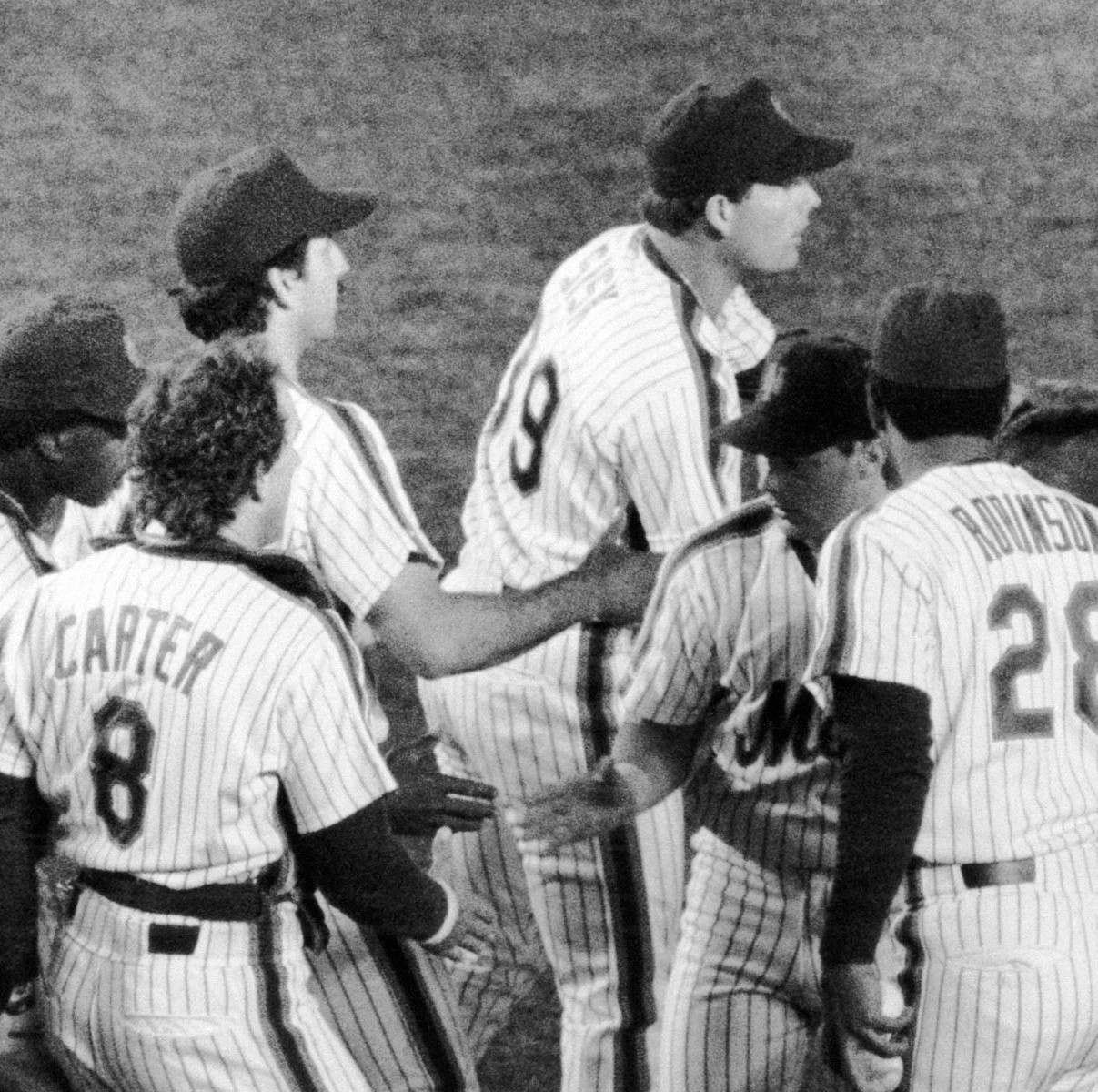
Darryl Strawberry was able to make a little more Mets magic happen in Queens, only this time it wasn't at the ballpark, but at his restaurant Strawberry's Sports Grill in Douglaston. This weekend saw Strawberry's former teammates Terry Leach, Barry Lyons and Kevin Mitchell as well as 1986 Mets coach Bud Harrelson, and ex-New York Giants punter Sean Landeta appear to raise money for Strawberry's Foundation for Autism Awareness.

Hundreds of supporters came to the small enclave near the Long Island Rail Road to see their Mets alums, participate in the many events and partake in the excellent cuisine of Strawberry's restaurant. Below are articles featuring video and interviews with the aforementioned members of the 1986 World Series Championship Mets team.

Kevin Mitchell returns to his baseball roots at Douglaston Community Day


Terry Leach delivers for autism awarness at Douglaston Community Day

Barry Lyons shares how B.A.T. sheltered him from Hurricane Katrina's destruction

Saturday, August 13, 2011

Kevin Mitchell returns to his baseball roots at Douglaston Community Day

The image of Kevin Mitchell ripping a single to center field following Gary Carter in the tenth inning of Game Six of the 1986 World Series is as bright for Mets fans as the sun shining off of his gold teeth while he joyfully signed autographs and posed for pictures with seemingly everyone in the enclave of Douglaston, N.Y. earlier this Saturday.

Mitchell was on hand to lend support to the Douglaston Community Day, which was a fundraiser to benefit Darryl Strawberry’s Foundation, which benefits autism research, as well the local little league and other community groups.

Kevin Mitchell / N. Diunte
During a break from his autograph session in front of Strawberry’s Sports Grill, Mitchell discussed his excitement about being a participant in the day’s events.

“It’s always a good thing when you can come back especially for a charitable event, doing something for one of your old teammates, Darryl Strawberry,” said Mitchell, who slugged 47 home runs en route to winning 1989 National League Most Valuable Player award. "It’s an honor that I am here and that there are still fans that want autographs from us. It’s been a decade [since I last played], you know, but I feel good about it.”

Mitchell was signed by the Mets in 1980 after being seen playing softball in the rough section of San Diego. He made his debut in 1984 and played a valuable utility role for the 1986 World Championship team. He was traded after the 1986 season to the San Diego Padres for outfielder Kevin McReynolds. Even though he only spent one full season with the Mets [1986], Mitchell had great memories of playing in the Big Apple.

“My [most] memorable thing is just New York period,” he said. "The fans here are great. This is where I first got drafted by the Mets. I was able to come and play with New York. Once I got traded from New York, I was able to play anywhere. By coming here as a rookie, everything else was a piece of cake because of the fans. If you ain’t out there giving it 100%, they’re going to let you know.”

As for now, Mitchell is working with children in San Diego, sharing some of the knowledge he learned after 13 seasons in the majors.

“I’m coaching travel baseball, I’ve got my own travel team called the Gorillas. I’ve got 8-16 [year olds]. The kids that won the Little League World Series, Parkview, those were my kids. They’re high school kids [now], but I’m still working with them.”

Speaking with conviction, Mitchell remains enthused to help the next generation succeed.

“That’s my passion. I love working with the kids. I could have a job working somewhere in the big leagues, but this is my passion. I want to see the kids progress and keep going,” said Mitchell.

He is trying to get them to avoid some of the pitfalls that derailed his potential Hall of Fame career.

“I try to teach them about education, alcohol - the main things they have to survive with. You can do it without doing all this other stuff to punish your body.”

Friday, August 12, 2011

Ernie Johnson, 87, Braves pitcher, announcer and World War II veteran

Earlier this evening, it was reported during the Atlanta Braves telecast that their legendary announcer Ernie Johnson Sr. died Friday after spending time in hospice care. He was 87.

One of the friendliest voices in baseball, Johnson spent over 50 years with the organization as a player, executive, and broadcaster. Johnson was one of a handful of players who were left from the Braves’ playing days in Boston. After getting a cup of coffee in 1950, his 15-4 record at AAA Milwaukee the next season paved the way for his full-time role with the Braves pitching staff in 1952.

Ernie Johnson / Topps
Johnson was a key factor in the Braves 1957 World Series victory over the New York Yankees, pitching effectively in relief for three games. He stayed with the Braves through the end of the 1958 season, playing one more year for the Baltimore Orioles after being released.


In 2008, I had the opportunity to interview Johnson via a telephone call from his home in Cummings, Georgia. He spoke with an unparalleled level of clarity and familiarity about his experiences in baseball and his service in World War II.

For a rookie like me, it was like speaking to a sage of baseball, but he held no pretenses about himself. His voice was as inviting as I remembered it from the countless evenings I watched the Braves on TBS.

As the number of living major league players who served in World War II continues to dwindle, Johnson’s experiences serving his country speak highly to his character. He happily shared his journey during his time in the military.

Signed in 1942 by the Boston Braves, Johnson pitched briefly at Class A Hartford before entering World War II. Johnson spent three years in the Marines, seeing action in Japan during the Okinawa invasion. Unlike some ballplayers who did not want to go overseas, Johnson saw the call of duty as his opportunity to help lead the country to victory.

“I could have stayed in this country," Johnson said. "The captain called me in the office and asked me if I wanted to play baseball here. The captain told me, ‘We'll keep you from going overseas, and you can play for the base team.'"

Mulling over the decision of whether to stay or leave, Johnson decided to go to Japan. He just could not desert the troops he trained with for so long.

“I don't want to sound gung-ho, but I got through spending a year or two with these guys and we were prepped and ready to go overseas," he said. "I just thought to myself, ‘I didn't want to play baseball; I joined to help win the war. I'm gonna stick with these guys.’ We went overseas, and I was in the Okinawa invasion.”

He returned for the 1946 season suiting up with Class B Pawtucket. Luckily for Johnson, his best years were ahead of him; however, others returning from service weren’t as fortunate.

“I didn't take me too long to get ready," he said. "I was young in the service. I missed three years and I was still only 21, 22. I got back in shape pretty fast. I felt sorry for guys that went in when they were 25, 26, and now they're 28 and you could see they lost it. They would say, ‘I can't do it anymore.’ The guys I was with in Pawtucket, they couldn't play like they used to and they didn't last very long. It was sad, they missed three to four years and it really affected their careers.” 

As a pitcher, he felt that he had an easier road back from World War II than a position player. He felt it was a lot easier to recover your arm strength than it was your overall feel for the game in the batter's box.

“Pitchers are more apt to not lose it," he said. "They get back in shape and on the mound, it's not different. [The] hardest thing is hitting; you lose your timing and your bat speed, and that's when you lose your career.” 

Fortunately for baseball, Johnson’s career blossomed after his service and led him into our homes for many years as the unmistakable voice of the Atlanta Braves. The legacy he left behind from his entire career as a baseball player, father, broadcaster, and veteran has left an indelible mark on everyone that was able to know him.

Tuesday, August 9, 2011

How Al Federoff left a lasting impact on Jim Leyland and the Detroit Tigers organization

“He was the best manager I ever had,” said current Detroit Tigers manager Jim Leyland in the Detroit News. Al Federoff was Leyland’s manager during his 1964 rookie campaign in Lakeland, Fla. It was also Federoff who rescued Leyland a few years later when the Tigers weren’t sure what to do with him while filling out their minor league rosters.

“Leyland was my good luck charm. I took him everywhere I could,” said Federoff during a 2008 interview I conducted with him from his home in Taylor, Mich.

While Federoff has received notoriety for mentoring Leyland, many are unaware that he was a sure-handed, light-hitting second baseman for the Tigers in the early 1950s. He died in Glibert, Ariz. last week at the age of 87.

Al Federoff / Author's Collection
Federoff was one of the fastest players in major league baseball in the 1950s, clocking a 3.8 second time from home to first batting right handed, placing him sixth in major league baseball according to the September 3rd, 1952 issue of The Sporting News.

He entered professional baseball in 1946 with the Jamestown Falcons of the Class-D PONY League after serving in the Air Force in World War II. After a few years of climbing the rungs of the minor league ladder, he was a late season call-up with the Detroit Tigers in 1951.

Inspired by his taste of the big league action, Federoff hit a solid .288 at AAA Buffalo in 1952 and was recalled in July when second baseman Jerry Priddy went down with a leg injury. It was during this time that he would bear witness to two of Virgil Trucks’ greatest pitching performances ever.

The first one happened August 6, 1952 against the ageless Satchel Paige and the St. Louis Browns. Trucks and Paige battled to a scoreless tie in the ninth inning when Trucks was lifted for a pinch-hitter. The 46-year old Paige pitched the entire 12 innings for the victory. Federoff took the collar twice against Paige in his five trips to the plate. Federoff insisted age wasn’t a factor in Paige’s performance.

“You can’t take nothing away from him [Paige]; if you’re good, you’re good,” said Federoff of the Hall of Fame hurler.

Federoff had a more involved role in Trucks’ August 25th masterpiece at Yankee Stadium. Hank Bauer, the Yankees strong left-fielder, stepped to the plate with two outs in the ninth. Bauer squared up one of Trucks’ fastballs right in the direction of Federoff.

“I get my name mentioned in the paper every now and then when Trucks pitched that no-hitter against the Yankees," told Federoff. "I made the last put-out on a hard smash by Hank Bauer for the final out; I saved the no-hitter!”

He finished the season with a .242 average and did what he was expected to do, play good defense at second base. His sure hands attracted the attention of another Hall of Famer, Tigers GM Charlie Gehringer.

“He came to me personally and told me, ‘You did damn good, your fielding was terrific,’” recalled Federoff.

While his fielding impressed Gehringer, his overall play did not do enough to sway manager Fred Hutchinson to give him an extension for the 1953 season.
 
“I was disappointed when they sold me to San Diego in 1953,” said Federoff, who thought he could add some youth to an aging ballclub. “Johnny Pesky was a good ballplayer, but he was already in his mid 30s, [Billy] Hitchcock was in his mid 30s and [Jerry] Priddy couldn’t run after that broken leg. Hutchinson kept him and he couldn’t even run; I hadn’t even hit my prime!”

Federoff was caught in a numbers game that was typical of his era, one that was prior to expansion and free agency.

“Another thing people don’t consider is that each league only had eight teams," he said. "Now they have an additional 320 40-man roster spots in each league. In our day, they sent you down to AAA and you would get lost down there because they had so many good players. Who was going to replace Jackie Robinson or Pee Wee Reese? If you were a SS or 2B [behind them], you were out of luck!”

Detroit wanted to send him to Buffalo, but he didn’t want to go back up north again after playing there the previous season.

“They tried to send me to Buffalo, but I wouldn’t go. I stuck around for a few days and they sold me to San Diego,” he said.

Federoff enjoyed four solid years with the Padres, helping to lead them to the 1954 PCL championship, walking 108 times against only 34 strikeouts.  During that championship season, he enjoyed the company of yet another mystical baseball figure, Luke Easter.

“He was my buddy; I liked him very much," Federoff recalled. "He protected me at second base. Any time he stepped up to the plate, the other teams were hoping he didn’t hit the long one."

Even though he was no longer in the major leagues, Federoff, like many other veterans enjoyed the comforts of playing on the West Coast. The warmer weather and improved travel were attractive propositions for ballplayers that endured the long bus rides that came with years of beating the bushes.

“In the PCL at that time, the playing conditions were better," he said. "We had a lot of good older players coming from the big leagues because the conditions were wonderful. A lot of great ballplayers finished their careers there and they were paid better than the big leagues. We played a week at home and a week at each city. We flew by airplane, and the weather was wonderful, especially in San Diego."

The same door that opened the opportunity for him to enter the big leagues is also the same one that closed his career. Bit by the injury bug, Federoff was robbed one of of the key elements of his game, speed.

“During my last year in San Diego, I was over the hill," he said. "San Diego traded me to Seattle. I played a year there. Then they sent me to Louisville, I played a half year there. I was sold to Atlanta and that was the end of my career. At the end I was overcoming a broken leg; I lost a lot of my speed. They had me there to fill in and just to work with the kids. They were interested in playing kids that had a chance to get up to the big leagues. You seem to know when you’ve had enough.”

After he hung up his cleats as a player, he entered the Tigers minor league system as a manager in 1960. He managed ten seasons, ending his career in 1970 ironically in the PCL, the place where he spent the bulk of his minor league time.

Despite never returning to the majors after the 1952 season as a player or a coach, Federoff was satisfied with his baseball career.

“I enjoyed it. I had some good days and bad ones like everybody else.”


Thursday, August 4, 2011

Astros J.D. Martinez first home run riles up his hometown supporters


Moments after J.D. Martinez hit his first major league home run, the action at Casanova's Baseball Academy in Hialeah came to a screeching halt. His first-inning blast off of Dontrelle Willis had the phone ringing off the hook. Former major leaguer Paul Casanova picked up the call and excitedly shouted, “Flaco did it! He hit his first home run!” All of the players working out stopped and cheered for the hometown rookie.

“Flaco” is the nickname which most of the people at the baseball academy call Martinez. Trained under the watchful eyes of major league veterans Casanova and Jackie Hernandez, Martinez built his legend right in Casanova's backyard, literally.

Casanova runs a training facility out of the backyard of his home, complete with pitching machines, batting cages and video recording equipment. Martinez has been faithfully attending sessions at the academy since he was a budding superstar at Miami's Flanagan High School. He was called up less than a week ago to replace Hunter Pence after his trade to the Philadelphia Phillies.


Both ex-major leaguers had ear-to-ear grins as the calls poured in and the highlights flashed on the MLB Network.

“He's been coming here since he was a kid," Casanova said. "Everyone down here knows he was working with us and we are just happy to see him do it.”

As Martinez topped off the rest of the game with two doubles, one of which narrowly missed being a home run, Hernandez confidently asserted that this will be a normal occurrence for Martinez. “He's been doing this everywhere he's been. Every level, he's hit. We will see him in left field for many years to come, just watch.”

While the cheers in Houston may have been plentiful for Martinez, they were just as loud in Hialeah, as the hopefuls watched one of their own begin to build his legacy in the majors.

“All of Hialeah is pulling for him.” Casanova said.

Tuesday, August 2, 2011

Bob "Tex" Nelson's career a golden example of the flawed bonus rule

Imagine signing a high school slugger for a few million dollars and the following week putting him at the plate against the likes of Justin Verlander and CC Sabathia. Bob “Tex” Nelson in 1955 did just that, debuting against Hall of Famers Early Wynn and Bob Feller right after his high school graduation. He was signed by Paul Richards as one of his hyped “bonus babies” in June of 1955. He died suddenly last week in Texas at the age of 74.

Click here to read more about Nelson's career and why it never got off the ground.

Wednesday, July 27, 2011

Archbishop Molloy grad Baxter could realize boyhood dream of playing for the New York Mets

Mike Baxter, who played under the legendary Jack Curran at Archbishop Molloy in Queens, is poised to replace Carlos Beltran on the Mets roster once he is traded. The 2002 Molloy grad was claimed off of waivers from the San Diego Padres last week after recovering from a spring training injury where he damaged ligaments in his left thumb after diving for a fly ball.

Since his signing, Baxter, the outfielder-first baseman was quickly promoted to Class AAA Buffalo from Class A Port St. Lucie after batting .438 in four games. Baxter didn't disappoint the Buffalo fans, swatting a home run in his first at-bat off of Scranton pitcher D.J. Mitchell.

The Whitestone native was excited about the possibility of playing with his hometown team. “I loved being with San Diego and I was disappointed at first, but then I was thrilled to learn I was claimed by the team I grew up rooting for. That was just fantastic."

Baxter made his major league debut as a September call-up in 2010, going 1-for-8, mostly as a pinch hitter. He was placed on the 40-man roster after his signing and could be first on the list to be recalled with Fernando Martinez and Kirk Nieuwenhuis on the disabled list.

More Info -
Baxter basking in big league call-up - New York Post
Meet Mike Baxter - Mets minor league blog
Queens native Baxter a hit with Triple-A PortlandDylan Butler

Mike Bielecki Has An Emotional Recall Of First Seeing His Rookie Baseball Card

Rookie cards in baseball cement a snapshot of hope, potential, and excitement in a player's career. Fans can clearly remember the hype surrounding a player's debut, as well as, where and how they acquired that special card. Looking back at the fresh faces drums up memories of an innocent time when they all had the opportunity to become impact major leaguers.

1985 Donruss Mike Bielecki

Players also have sharp recollections of first looking at their initial, and sometimes only, appearance on a baseball card. These cardboard treasures signaled they made it, officially immortalized on cardboard as a professional ballplayer. Handing a player their rookie card to sign often presents a memorable exchange about their memories of when they were first asked to sign it.

Mike Bielecki, 14-year major league veteran, was named Baseball America's Minor League Player of the Year in 1984 after going 19-3 for the Hawaii Islanders of the Pacific Coast League. He was a September call-up, pitching 4.1 scoreless innings of relief, long enough to earn him a spot as a “Rated Rookie” in Donruss' 1985 set.

When given his 1985 Donruss issue at a charity event last week, Bielecki starkly recalled being unaware the card was out when he was first asked to sign it.

“I was at a ceremony in the winter [of 1984] being honored as the Minor League Player of the Year, and some little kid hands me the card to sign at the end of the evening,” Bielecki said. “I go, 'What is this?', I didn't even know the card was out. I offered the kid money for the card, but he wouldn't take it; he wanted the signature.”


Saturday, July 23, 2011

Former Mets catcher Sasser receives Hall of Fame honors

The visions of Mackey Sasser double and triple pumping before throwing the ball back to the pitcher are vivid memories for New York Mets fans. The former catcher's struggles with his throwing are well documented, but now the 48-year-old Sasser has been able to share his major league experience with the next generation of aspiring ballplayers at Wallace Community College.

Sasser has been the head coach at Wallace for the past 14 seasons where he starred as a player (1982-83) before signing with the San Francisco Giants. During his tenure he's posted a 462-281 record and has been able to have numerous players sign professional contracts.

Last week, Sasser was inducted into the Wiregrass Sports Hall of Fame in Alabama. Sasser played nine seasons (1987-95) for the Mets, Pirates, Giants and Mariners. While most recognize Sasser for his throwing problems back to the pitcher, he batted .307 with the Mets in 1990 and displayed a tremendous arm throwing out runners across the diamond.

His problems worsened after a collision at the plate with Jim Presley of the Atlanta Braves. Sasser suffered a torn Achillies tendon that further affected his ability to throw. He signed with the Seattle Mariners after the 1992 season, playing two injury plagued seasons with them. He spent one more with the Pirates in 1995 before retiring.

After some therapy, Sasser has been able to rise above the challenges he faced on the field.

"I didn’t want to deal with it anymore and moved on. I was able to get some help and it’s not a problem now. I had to learn to deal with myself, not just the problem,” Sasser said to the Dothan Eagle.

As a coach, Sasser takes great pride in watching his players develop not only on the diamond, but in their personal lives.

"I make my kids work hard because I want to get the best out of them," he said. "The most gratifying thing to me is when one of them comes back a few years later and he’s started a family or used his education to get a good job. I want to see them get to where they need to be.”

Friday, July 15, 2011

Ron Darling and Keith Hernandez give an assist to Habitat for Humanity in Brooklyn

The New York Mets Alumni Association presented by Citi teamed up with Habitat for Humanity in Brooklyn earlier Friday for their “100 Homes in Brooklyn” project. Current SNY broadcasters and Mets alumni Ron Darling and Keith Hernandez represented the team at the Brownsville site. 


Both players address the media at the ceremony. Darling was grateful to be a part of the construction process.

“Both Keith and I are humbled by our opportunity to represent the Mets here,” Darling said. “For the Mets to include Keith and I with Habitat for Humanity and Citi, how great is that? To be able to put a roof over someone’s head, I don’t know if there is any better feeling you can have.”

Darling volunteered in New Orleans with his family in support of Habitat for Humanity. He enjoyed seeing his work come to fruition.

“I wasn’t down there volunteering as Ron Darling; I was just another guy with his family helping out. It was rewarding for the people that take part in it," he said. "The volunteers should be commended. At some point, your sweat equity and hard work will have someone indoors this winter.”

Josh Lockwood, the Executive Director of New York City’s Habitat for Humanity, discussed their valuable relationship with the New York Mets. He described how the relationship has grown over the past few years.

“This is the third year that the Mets alumni have been coming out to build with us,” Lockwood said. “It started a few years ago when the 1969 Mets completed our largest project ever. Last year and this year, we’ve had great philanthropically minded alumni coming out helping to build Habitat homes alongside the families that will live there.”

With the help of New York City officials, Habitat for Humanity has been able to acquire the land for basically free, providing they build affordable housing. The tremendous community interest in the dwellings has motivated them to work harder.

“We had a 41 home project a couple blocks away from here and that project had 10,000 applications for those homes,” he said. “It really inspired us to try and do more and build more. That’s led to an initiative to 100 homes in Brooklyn, and these 12 homes are going towards that.”

Georgette Lee, one of the people who was awarded one of the coveted homes, had a tremendous appreciation for the chance to have her part of the American dream. Today, it was a reality.

“I applied in March and was accepted April 1st,”  said Lee, who is looking forward to staying in the community where she was raised. “I met the income requirement, the credit check and I worked 200 sweat equity hours, which I did in five weeks.

“I think it is a wonderful opportunity because for years and years, I never thought I would be able to own anything in New York. To get the opportunity to not only own, but to help build and stay in the community where I was brought up is great.”


Tuesday, July 12, 2011

Robinson Cano gets an assist from his father during the Home Run Derby

Last night's Home Run Derby champion, New York Yankees second baseman Robinson Cano didn't have to go far for family support, it was 60 feet away. His father Jose was throwing perfect pitches down the pipe all night long. It shouldn't be a surprise though; the elder Cano was a pitcher for the Houston Astros in 1989.

Click here to read more about Jose Cano's career and his relationship with his All-Star son.

Monday, July 11, 2011

Seven decades of World Series highlights signed by 12 baseball immortals

To celebrate the 2011 All-Star weekend, A&E Home Entertainment is providing a sale on a truly impressive 21 DVD collection of seven decades of World Series highlights presented in a stunning 58-page commemorative book. There will be a 30% sale on everything baseball when you enter the code PLAYBALL from July 11-13, 2011 from shop.history.com

Only 100 of these editions have been hand signed by 12 Hall of Famers, which is described below. Those ordering the autographed edition will also receive a custom case to display their wares. You can order the autographed edition by clicking here.

For those that cannot afford the price tag on the limited edition set, the sale also applies to the standard 21 disc version which still comes in the beautiful commemorative book. We at Baseball Happenings have been given a screening copy of the set and it is truly a treasure for any baseball fan. This edition of the World Series Film Collection can be ordered by clicking here.


A&E HOME ENTERTAINMENT AND MAJOR LEAGUE BASEBALL PRODUCTIONS UNVEIL A SPECTACULAR, LIMITED-EDITION, AUTOGRAPH-ENHANCED VERSION OF THE OFFICIAL WORLD SERIES FILM COLLECTION


The quintessential blend of baseball history and history-makers comes together in an unprecedented intersection of a luxurious Major League Baseball DVD collectible with authentic Hall of Fame signatures with SIGNATURE LINE: THE OFFICIAL WORLD SERIES FILM COLLECTION.  Available exclusively on Shop.History.com and Shop.MLB.com, the DVD set, which elegantly displays the iconic moments and legendary heroes across seven decades of World Series Films, will only be offered to sports fans around the globe in a limited-edition run of 100 for $2299.


The Signature Line edition will be embellished with the signatures of 12 World Series legends and Hall of Famers -- who helped pen World Series history and created many of the defining moments of Major League Baseball.  Authenticated by Mounted Memories, an MLB licensee and leader in the sports collectibles field, the set will also be officially licensed and authenticated by Major League Baseball, with each unit individually numbered and marked with a sequentially coded hologram to ensure authenticity.

SIGNATURE LINE: THE OFFICIAL WORLD SERIES FILM COLLECTION will be gilded by the golden signatures of:

  • Yogi Berra: Most World Series Championships, most hits, most doubles, singles, putouts, and guided Don Larsen to the only Perfect Game in World Series history.
  • Bob Gibson: Two-time World Series MVP, most strikeouts in a World Series game (17) and totaled 92 Ks in 81 innings pitched.
  • Reggie Jackson: “Mr. October” blasted 10 Fall Classic Home runs including three in a row on three pitches in 1977.
  • Johnny Bench: Driver of the Big Red Machine and defensive titan, he won the 1976 World Series MVP after batting .533 with two home runs.
  • Whitey Ford: The “Chairman of the Board” holds numerous World Series pitching records including: most strikeouts (94), most wins (10), innings (146), WS games (22).

Rounding out the star-studded roster of Fall Classic icons are:

  • Gary Carter
  • Bob Feller
  • Rollie Fingers
  • Carlton Fisk
  • Brooks Robinson
  • Mike Schmidt
  • Bruce Sutter

About THE OFFICIAL WORLD SERIES FILM COLLECTION

The drama and unforgettable images of baseball are the World Series moments celebrated from generation to generation.  Now, for the very first time, these dynamic events have been preserved and commemorated in a timeless treasure certain to become the centerpiece of any baseball fan’s home entertainment library.  Elegantly displaying the complete set of official filmed World Series highlights across six decades of World Series Films (1943-2008), this encyclopedic set is divided into 14 eras and features 50 hours of unforgettable baseball action across 20 remastered DVDs.

With a foreward by 19-time Emmy winner Bob Costas of MLB Network and framed with 58-pages of editorial, remarkable archival images, and rare Hall of Fame artifacts, the dramatic package creates a timeline of World Series lore since 1903. The 65 official World Series Films feature more than 50 hours of restored, digitized, and glorious history as it happened.

The list of baseball’s greatest moments is dominated by the iconic events of the World Series and they live in this significant DVD trophy. These instantly recalled plays and players are showcased within this one-of-a-kind compendium including “The Catch” by Willie Mays, Don Larsen’s Perfect Game, Bill Mazeroski’s series-winning walk-off home run, Bob Gibson’s record setting 17-strikeouts, Carlton Fisk’s dramatic home run, Reggie Jackson’s three consecutive home runs, Kurt Gibson’s improbably Hollywood game winner and Jack Morris’ dominating 1-0 Game 7 masterpiece.

This collection celebrates the images, plays, and heroes that make the World Series a cherished and significant event. As history unfolds technology evolves changing the annual documentary’s style. From the black and white editions, produced and narrated by Lew Fonseca (AL batting champ 1929, Cleveland Indians) thru the narration by legendary broadcasters including Mel Allen, Bob Prince, Harry Caray, Vin Scully, to the current Official World Series Film versions featuring multiple camera angles, players and coaches wired for sound, and play-by-play from TV and radio broadcasters, each annual film is a time capsule of its era.  Records and seasons change with time, but the legends and lore of the World Series on DVD will last forever.

THE OFFICIAL MAJOR LEAGUE BASEBALL® WORLD SERIES FILM COLLECTION includes these 20 DVDs:

  • Disc 1 -- 1943 Yankees, 1944 Cardinals, 1945 Tigers, 1946 Cardinals, 1947 Yankees, 1948 Indians (approx 182 min)
  • Disc 2 -- 1949-53 Yankees (approx 167 min)
  • Disc 3 -- 1954 Giants, 1955 Dodgers, 1956 Yankees (approx 115 min)
  • Disc 4 -- 1957 Braves, 1958 Yankees, 1959 Dodgers, 1960 Pirates, 1961 Yankees (approx 182 min)
  • Disc 5 -- 1962 Yankees, 1963 Dodgers, 1964 Cardinals (approx 100 min)
  • Disc 6 -- 1965 Dodgers, 1966 Orioles, 1967 Cardinals, 1968 Tigers (approx 152 min)
  • Disc 7 -- 1969 Mets, 1970 Orioles, 1971 Pirates (approx 116 min)
  • Disc 8 -- 1972-74 A’s, 1975-76 Reds (approx 170 min)
  • Disc 9 -- 1977-78 Yankees, 1979 Pirates, 1980 Phillies, 1981 Dodgers (approx 166 min)
  • Disc 10 -- 1982 Cardinals, 1983 Orioles, 1984 Tigers (approx 107 min)
  • Disc 11 -- 1985 Royals, 1986 Mets, 1987 Twins (approx 119 min)
  • Disc 12 -- 1988 Dodgers, 1989 A’s, 1990 Reds (approx 177 min)
  • Disc 13 -- 1991 Twins, 1992 Blue Jays (approx 139 min)
  • Disc 14 -- 1993 Blue Jays, 1995 Braves (approx 132 min)
  • Disc 15 -- 1996 Yankees, 1997 Marlins (approx 143 min)
  • Disc 16 -- 1998-2000 Yankees (approx 186 min)
  • Disc 17 -- 2001 Diamondbacks, 2002 Angels (approx 145 min)
  • Disc 18 -- 2003 Marlins, 2004 Red Sox (approx 142 min)
  • Disc 19 -- 2005 White Sox, 2006 Cardinals (approx 152 min)
  • Disc 20 -- 2007 Red Sox, 2008 Phillies (approx 163 min)

Thursday, July 7, 2011

Wes Covington | 1957 World Series hero dies at 79

Wes Covington, the upstart who helped spark the Milwaukee Braves to victory in the 1957 World Series, died of cancer in Edmonton, Alberta, on Monday. He was 79.

Wes Covington
Born March 27, 1932 in Laurinburg, N.C., John Wesley Covington was signed by the Boston Braves in 1952. He was sent to their farm club in Eau Claire, Wisconsin, where he roomed with a skinny 18-year-old from Alabama, Hank Aaron.

Covington led the team in home runs that season and according to Aaron in his autobiography, "I Had a Hammer: The Hank Aaron Story", Covington was thought to be the bigger power threat.

"If people had known that one of our players would someday be the all-time, major-league home run leader, everybody would have assumed that Covington would be the guy," Aaron said.

Early on, Covington did show his prowess at the plate, hitting 21 and 24 homers respectively in 1957 and 1958, but his subsequent lack of defensive abilities kept him from being a full-time player. In 11 seasons, Covington belted 131 homers while playing for six different teams.

Al Spangler, who played 13 seasons in the majors, was a teammate of Covington's in 1955 with Jacksonville and then again with the Braves from 1959-1961. Spangler noted Covington's strengths tipping towards his work at the plate.

"Overall, he was a great player," Spangler said via a phone interview from his Texas home. "He didn't like to play defense, but he was a great hitter. When we played together in 1960, he played left field and I would go in the later innings and replace him for defensive purposes."

Surprisingly, Covington is famous for plays he made on defense during the 1957 World Series. His two stellar catches in left field helped to preserve victories for the Braves. In Game 2, he made a nearly impossible grab off of a drive from Bobby Shantz’s bat and in Game 5, he robbed Gil McDougald of a homer after crashing into the fence to make the catch. To his former teammates though, Covington will be best remembered for his kindness. Earl Hersh, who played with Covington in the majors with Milwaukee and the minors with Wichita, had nothing but superlatives for the fallen outfielder.

"He was to me, a first class guy," said the 79-year-old Hersh from his Pennsylvania residence. "Everything was good that I knew about him. He was a nice person and a good ballplayer. I found him fun to be around; just a good time guy."

Bobby Malkmus, who also played with Covington in Jacksonville before teaming up on the Braves, said in a phone interview from his New Jersey home that Covington remained a loyal teammate despite the racial barriers which existed during the time.

"He was a tremendous guy, easy to get along with," Malkmus said. "We got along really well. He was a good ballplayer and a good friend. [There was] no black and white situation with him; he was just a good teammate, kind of a jolly person."

Covington, like many black players during the 1950s faced the challenges of Jim Crow segregation while traveling. Spangler recalled some of the difficulties that Covington and the other black players faced on the Jacksonville team in 1955.

“We had Wes and another African-American, Horace Garner," Spangler recalled. "They couldn't even get off the bus to go in and have lunch when we were traveling. When we arrived at a town, we never saw them again until game time.”

Malkmus, who played with Spangler and Covington in 1955, was saddened by the hardships faced by his recently deceased teammate.

“They had to stay with black families on the road," Malkmus said. "They didn't eat with us on the road. If we stopped to get something to eat, they either had to eat in the kitchen or we had to bring them food out to the bus. It was terrible.”

Malkmus was raised in the diverse city of Newark, New Jersey, which made sympathetic to the plight of his African-American teammates like Covington. He recalled the difficulties they faced in Southern cities. 

“I was born and raised in Newark amongst the blacks and got along with them really well," he said. "My experience with the South was brutal as far as blacks and whites were concerned. They didn't treat the blacks well. We used to shower and play with them, but we couldn't live with them.”

Upon finishing his baseball career with the Los Angeles Dodgers in 1966, Covington moved to Western Canada and operated a sporting goods business. He worked for the Edmonton Sun newspaper for 20 years as an advertising manager and then the Edmonton Trappers baseball club in a front office position. Covington rarely appeared in the States after moving to Canada except for the occasional Braves reunion or card show.

In 2003, Covington returned to Milwaukee after an almost 40-year absence. When asked why he had removed himself so far from the town where he built his baseball legend, Covington revealed motives outside of the sport.

“It's nothing against the city or the great fans," Covington said. "I just had other things I wanted to do with my life. I didn't want to be a baseball bum, living in the past."

Wednesday, July 6, 2011

Derek Jeter's All-Star selection less than deserving

Keith Allison / Flickr
As Derek Jeter inches closer to the 3000 hit plateau, further cementing his legendary status, critics have questioned his recent selection as the starting shortstop for the 2011 All-Star team. Entering today’s game sporting a .257 batting average with only 13 extra base hits; the Wall Street Journal said the shortstop’s selection was unwarranted. “Jeter has never been less deserving of the award,” wrote Daniel Barbarisi. Barbarisi cited Jeter’s OPS (on-base plus slugging percentage) was the lowest for a starting American League All-Star shortstop since the diminutive Freddie Patek in 1978.

Wednesday, June 29, 2011

Yogi Berra greets fans at the home of the New Jersey Jackals

Fresh off of his appearance at the New York Yankees Old Timers' Day, Yogi Berra made his annual appearance at Yogi Berra Stadium in Montclair, home of the New Jersey Jackals of the independent Can-Am League. Adjacent to the Museum and Learning Center that bears his name, Berra signed autographs for the few hundred fans who lined up since 8am to meet the Yankee Hall of Famer.

Click here to read more about the Hall of Famer's appearance at his stadium in New Jersey.

Monday, June 27, 2011

Old Timers' Day a series of firsts for Jose Cardenal

The age of 67 is unusually late to make a debut, but for Jose Cardenal, Sunday afternoon was his first appearance at Yankees Old Timers’ Day. Many fans from Cardenal’s playing days might be scratching their heads trying to remember when the speedy outfielder wore the Yankee pinstripes. It wasn’t as a player, but as a coach that Cardenal donned a Yankee uniform.

Thursday, June 23, 2011

Mitch Williams - Straight Talk from Wild Thing - Book Review

Admittedly, Mitch Williams’ best pitch was his fastball. No deception, just a high hard one that was at times, known to have a mind of its own. Earning the nickname “Wild Thing,” for his ornate pitching motion and resulting lack of control, Williams stays true to form with his new book, Straight Talk from Wild Thing co-authored by Darrell Berger.

Click here to read a full review of Williams' new book as well as watch video of him discussing the work on NBC 10 Philadelphia.

Sunday, June 19, 2011

Willie Harris and Justin Turner greet Mets faithful at BJ's in Flushing

Two members of the New York Mets, Willie Harris and Justin Turner made an appearance Saturday afternoon at BJ's in Flushing. Harris and Turner greeted fans, posing for pictures and signing autographs for an hour. Click here for more photos and video interviews with Turner and Harris from the signing.


Thursday, June 16, 2011

Book Review - Always a Yankee - By Douglas Williams and Jim Coates

The prestige, honor and infamy of wearing the Yankee pinstripes are some of the most magical forces in sports. Players who spent even a short time with the Bronx ballclub are often identified by their ties to baseball’s most storied franchise. Therefore, it is only right that Yankees World Series hero Jim Coates has titled his memoirs, "Always a Yankee: A Pitcher's Story; Jim Coates, He Beats the Odds to Become an All-Star and a World Champion". Co-authored with Doug Williams, Coates tells vivid tales of how he made it to the Yankees from the farms in Virginia.

Click here to read the entire review of Coates and Williams' "Always a Yankee."

Monday, June 13, 2011

Hiram Bithorn created a path for Puerto Ricans to enter major league baseball

As thousands of Puerto Ricans rejoiced in New York City this weekend for the annual Puerto Rican Day Parade, many flocked to stadiums across the country to watch professional baseball games. The Commonwealth that has produced such greats as Hall of Famers Roberto Clemente, Orlando Cepeda, and Roberto Alomar, should offer a tip of the cap to a pioneer that opened the door for these talented names to follow.

Five years before Jackie Robinson, Hiram Bithorn blazed new pathways in major league baseball. Suiting up with the Chicago Cubs on April 15, 1942, he became the first Puerto Rican in MLB history.

Born March 18, 1916 in Santurce, Bithorn excelled in athletics from a young age despite missing his right big toe. In addition to starring in baseball, he represented Puerto Rico in basketball and volleyball at the Juegos Centroamericanos y del Caribe (Central American and Caribbean Games) in 1935.

Bithorn made his 1936 debut in organized baseball with the Class-B Norfolk Tars of the New York Yankees organization. He moved up the ranks playing for Norfolk and Binghamton before moving to the Yankees AA Newark club in 1938. This season proved to be an important one for Bithorn in more ways than one.

Already a star in the Puerto Rican winter leagues with the San Juan Senadores, Bithorn created history of his own there, making his mark as the youngest manager in league history at the age of 22 that winter. Returning with the confidence of managing his own club, Bithorn moved to the veteran laced Pacific Coast League in 1939, playing with the Oakland Oaks. He had a 13-14 record and spent the following two seasons playing with Hollywood, posting 27 wins during that span and drawing the attention of the Chicago Cubs scouts.

He was purchased from Hollywood at the end of the 1941 season and was quickly inserted into the Cubs pitching rotation at the start of 1942. He went 9-14 pitching in 38 games, starting 16 of them. Lennie Merullo, the shortstop on the 1942 team, had clear memories of Bithorn’s acquisition.

“I can remember that Hiram was brought along in the Yankee organization and the Cubs got him in some sort of a deal," Merullo said in a 2009 interview from his Massachusetts home. "Boy he was a big help in our organization!”

Bithorn’s value would manifest the following season when he was 18-12 with a league leading seven shutouts in 249 innings. Merullo explained how Bithorn's control was the key to his success that season.

“He was a hard thrower and had a great curveball," he said. "He had a natural sinker that he would throw from a low three-quarter position. When he pitched, we knew as infielders we were going to get a lot of work. He was always good, but you knew you were going to be busy.”

As a Latin player on the Cubs, "Hi" as he was nicknamed by reporters, wasn’t alone in his journey. The Cubs brought in Cuban catcher Chico Hernandez to work with Bithorn. Hernandez played both the 1942 and 1943 seasons alongside the trailblazing Puerto Rican. They were only the second Latino battery in major league history. The duo was well-liked in the clubhouse.

“They were both very popular with the rest of the ballplayers," Merullo said. "We got along great with them. We kidded them quite a bit, because they were both big handsome guys and spoke with mostly broken English. They took it gracefully.”

Bithorn’s playful nature allowed him to roll with the ribbing he received from his teammates.

“He was kind of a happy guy," he said. "He took a lot of kidding from the rest of his teammates over and over again, him and Chico,” acknowledged Merullo, adding that Bithorn and Hernandez had their own way of turning the tides on their teammates. “They would gang up on us. They were always happy to do it.”

Just as Bithorn’s career was beginning to take off, he was summoned by Uncle Sam to serve in the United States Navy. He served at the San Juan Naval Air Station beginning in 1943, where he was player-manager of the base team. Discharged just short of two full years of service, Bithorn eagerly anticipated his return to the Cubs.

Just before returning to the United States, Bithorn injured his hand during a winter league game. This delayed his return to the Cubs, and when he got back, he couldn’t recapture the enchantment that made him so special before entering the service.

He went 6-5 in 1946, primarily in relief, suffering from what was believed to be arm problems, weight gain and a possible nervous breakdown. He would pitch two more innings in the major leagues in 1947 with the Chicago White Sox and then never return to the big leagues. He unsuccessfully tried a comeback at the AA level in 1949, and retired as a player following the completion of that season.

Bithorn’s history is sealed in as much as his debut, as his tragic death. On December 30, 1951, Bithorn was shot by a police officer in Mexico after a dispute over selling his car. The officer, Ambrosio Castillo shot Bithorn and then drove him 84 miles away to the Ciudad Victoria hospital. Bithorn died shortly thereafter. Doctors claimed that if Bithorn had been treated earlier that he might have lived.

Castillo was convicted on homicide charges after his version of the dispute didn’t hold up in court. At age 35, one of Puerto Rico’s heroes was laid to rest in his hometown only after his body was exhumed from an improper burial in Mexico.

Ten years later after his burial in Puerto Rico, their largest baseball stadium was renamed Estadio Hiram Bithorn in his honor. The stadium, which is home to the Senadores, was also the home of the Montreal Expos for the 2003 and 2004 seasons.

Thursday, June 9, 2011

Maury Wills proudly represents the Dodger blue at the 2011 MLB draft

Sixty years after signing with the Dodgers, Maury Wills continues to bleed Dodger blue. Wills appeared in New York City at a pre-draft luncheon earlier this week as the official representative of the Los Angeles Dodgers at the 2011 Major League Baseball First Year Player Draft. “El Fantasma” (The Ghost) as he was nicknamed in Venezuela for his base-stealing ability, spent a few minutes discussing his 1951 entry into the famed then-Brooklyn organization.

“I was signed out of a tryout camp,” Wills recalled during the festivities. “The guys in the projects saw this ad in the newspaper for Washington D.C. kids between the ages of 17-19 to come and bring your gloves and spikes.”

Maury Wills

His courtship by the Dodgers differed greatly from the hopefuls that awaited Monday evening’s selections.

“We went and performed in front of the scouts,” he said. “There was no such thing as a draft deal like now where they see you play and approach you for a nice bonus. I got $500 and I gave it to my dad. He never saw $500 at one time in his life.”

Wills thought his signing was going to bring life changing riches. He quickly learned that wasn't the case for a young ballplayer at the lowest level of professional baseball.

“At the time, before I signed, I thought I was going to get all of this money and take my family out of the projects, but that didn’t happen,” he said. “I signed for $130 per month and $1.50 per day meal money.”

Despite the rough road he faced toiling the minor leagues for nine years, climbing the ladder all the way from Class-D Hornell to the majors, Wills would repeat his journey.

“I would do it again today,” he said. “I would pay that price.”

It was that proverbial price Wills paid that allowed him to represent the Dodgers at the 2011 MLB Draft. Throughout all of his well chronicled battles with drug abuse, he acknowledged a divinely spirit guiding him along his continued path in baseball.

“Signing for that $130 per month and that meal money, that’s what got me here,” he said. “If I didn’t want to sign for that, I wouldn’t be here. I paid the price all the way, even after getting to the big leagues. That’s the only reason I’m here, not because of myself, but in spite of myself; it was God’s grace. For the Dodgers to ask me to come here to represent them, it’s really flattering.”


Tuesday, June 7, 2011

Jose A. Pagan, 76, played 15 seasons with three clubs

Jose Pagan, who played 15 seasons in the majors between 1959 and 1973 with the San Francisco Giants, Pittsburgh Pirates and Philadelphia Phillies, passed away Tuesday at his home in Sebring, Fla. He was 76.

Click here to read more about Pagan's career and passing.

Jose Pagan

Saturday, June 4, 2011

Mets alumni team up with City Harvest to help the hungry

Mets Alumni team up to assist City Harvest
In a continuing series of community based events, the Mets Alumni Association presented by Citi teamed up with City Harvest Friday evening before the Mets game against the Braves to package more than 25,000 lbs. of potatoes for New York area food charities.

The Mets brought out a roster of players from all of their teams that appeared in the World Series (1969, 1973, 1986 and 2000). Assisting in the packing efforts were Cleon Jones, Jim McAndrew, John Stearns, Rick Aguilera, Doug Sisk and Dennis Cook.

Gary Carter's teammates come together in support of The Kid

Gary Carter might be facing his toughest opponent yet; however, he can continue to battle strongly knowing he has the full support of his teammates. The Hall of Fame catcher is suffering from inoperable brain cancer and was in the forefront of two of his teammates thoughts Friday evening.


Carter's World Champion 1986 New York Mets teammates Rick Aguilera and Doug Sisk were at Citi Field Friday night for a series of events sponsored by the New York Mets Alumni Association presented by Citi. It was very clear that throughout the evening, their thoughts were with their beloved catcher.

The 49-year-old Aguilera works as a high school baseball coach at Santa Fe Christian in San Diego. He has been in contact with Carter recently in a show of solidarity for his cancer stricken battery-mate.

"We've texted each other and I let him know that my family is praying for him,"Aguilera said. "We're hoping that he understands and feels his teammates support and the fans support. I'm sure it means a lot to him."

The 53-year-old Sisk, works for the Mets as a part-time scout in the Seattle area where he currently resides. He wanted to share the same encouragement with Carter that his catcher give him on the mound.

"Gary was a great teammate, always positive about everything. I never heard a bad word out of his mouth, except for a food spread in Pittsburgh once," Sisk said. "He'd catch a night game then a day game; he was just a workhorse. When I had my bad times, he would try to pump me up and try to help out every way, hopefully we can all do that for him now."

Tuesday, May 31, 2011

Billy Harris, former Brooklyn Dodger passes away at 80

Billy Harris, former pitcher for the Brooklyn and Los Angeles Dodgers and member of the Canadian Baseball Hall of Fame, passed away Friday night at the age of 80 at his home in Kennewick, Wash.

Billy Harris, 1957 Brooklyn Dodgers
Harris was hospitalized about a month ago for bleeding ulcers after he fainted in his restaurant, Billy’s Bullpen. Discharged from the hospital two weeks ago, Harris never fully recovered from his ailments.

Just a few short months ago in February, I interviewed Harris for a story I authored about his teammate, Clyde Parris. Harris was cheerful and spoke glowingly not only about his Montreal teammate, but his entire career in baseball. Harris drank from the smallest cups of coffee, pitching two games for the Dodgers, one in 1957 and the other in 1959, but for Harris, what a sweet cup it was!

“It was a great feeling to go up there," Harris said during our phone interview in February 2011. "Every time they called me up, I knew the guys from spring training so it was just like meeting old buddies again.”

Harris gained accolades for being one of the early Canadians in the majors. Hailing from Duguayville, N.B., Harris epitomized the pinnacle of achievement for a baseball player from such a small area.

“Billy defined Canadiana. Small town boy makes good,” said Tom Valcke, president & CEO of the Canadian Baseball Hall of Fame in an interview with Kevin Glew of the Canadian Baseball Network.

Harris signed with the Dodgers at the age of 19 in 1951 when he was offered a contract by Bill O’Connor while he was playing hockey. He found immediate success with Class-D Valdosta, posting an 18-9 record with a 2.19 ERA.

He quickly climbed the ladder, skipping two levels to Class-B Miami the following year. During his magical 1952 season, Harris went 25-6 with a minuscule 0.83 ERA, a record for the lowest season ERA for a pitcher in organized ball. 

When asked about his breakout season, Harris remained humble about his achievement.

“I think the record still stands for ERA, 0.83," he said. "I won 25 games and three more in the playoffs which doesn’t count in the standings. I had good defense, but I had good stuff. My fastball was really moving.

“I don’t know it just one of those deals. It was kind of a pitcher’s league but we had a good team behind me. I had Chico Fernandez at short, Dick Gray at third and [Jimmy] Bragan at second base. We had a good outfield that could go get ‘em, so that helped the team. All I had to do was throw the ball over the plate.”

Harris ascended the ranks the following season, playing in AA Fort Worth and Mobile. He spent the next three seasons shuttling between AA and AAA, making brief stops with Montreal in 1954 and 1955 before settling in for good with the Canadian club in 1956.

His previous stops in Montreal while brief, proved to be rather memorable. In 1954, Harris only pitched three games for Montreal, but it gave him enough time to join baseball’s golden child’s Roberto Clemente on the bench for his only season in the Dodger organization. Clemente was being “hidden” by the Dodgers brass that season, being used sparingly with the hopes that another team would not claim him while he waited in AAA.

During one of their conversations on the bench, Clemente revealed to Harris where his next destination would be.

“I remember, we always sat and talked on the bench," he said. "They didn’t play him too much as they tried to hide him as he was up for grabs because he was sent down and made more than a $10,000 bonus. He was sitting there telling me, ‘Billy, next year I go to Pittsburgh.’ I said ‘What do you mean?’ He said, ‘Look up in the stands.’ It was Clyde Sukeforth up there.”

Harris marveled at the talent that was around him in Montreal. Looking back they had enough talent to make a major league team on their own.

“I think we had a team in Montreal that would beat most of the major league teams," he said. "Sparky Anderson was my second baseman. We also had Rocky Nelson, John Roseboro, Clyde Parris, George Shuba, Dick Williams and Chico Fernandez. Those were some great names.”

During the winters in between his forays with the Dodgers minor league clubs, Harris went to the Caribbean to bolster his income and polish his pitching skills. He played six years in winter ball in both Panama and Venezuela.

“The pay was good," he recalled. "You didn’t want to take a real job. I played two years in Panama and four in Venezuela. For two of those years, I played in the Caribbean Series and then I went right to spring training.”

Finally in 1957, after eight years in the minors, Brooklyn reached down and called for Harris to join the major league club. With the reserve clause, all he could do at the time was wait for the call to the show.

“You belonged to the team," he said. "There was no free agency and no union to protect you. I was called up to the Dodgers and they kept me back because Buffalo was fighting for the pennant. The league owner told me I had to stay to pitch against them. I beat Buffalo, I think it cost them the pennant and the next day I went with the Dodgers.

“I pitched the next to the last game of the season in 1957 against the Phillies in Philadelphia. The last game Roy Campanella caught; I pitched that game. I got to know him quite a lot in spring training. I used to hit grounders to the infielders and he would back me up and we had a ball. He was funnier than hell. He was a great guy. He had a nickname for me; he’d call me 'muscles.' I was built kind of strong in those days. Just think next year he would have played in the Coliseum and he would have popped a whole bunch off the porch there.”

Harris was called up again at the end of the 1959 season to relieve the Dodgers pitching staff as they made a run at the World Series. He hurt his arm the following season and wound up playing for Tri-City a few years later, luring him to his Kennewick residence.

“They had a team in Tri-City where I live now," he said. "I didn’t even know where this place was. They needed a coach, so I pitched and coached. My wife was from Montreal and I was from New Brunswick and we decided to live there. We bought a home and I decided to get into this business,” said Harris.

The business he referred to is his sports bar, Billy’s Bullpen in Kennewick.

“I’ve owned this for 25 years. It’s a sports bar, we have a lot of fun here.”

Harris is survived by his wife, Alice, daughter Gail and sons, Billy Jr. and Rick, as well as seven grand children.