Thursday, May 26, 2011

How Mickey Mantle swept through Joplin on his way to stardom

With Joplin, Missouri devastated by an EF-5 strength tornado, the highest possible on the Enhanced Fujita scale of tornado power and intensity, much of the country’s attention is focused on beginning the relief efforts in this southwestern Missouri city.

While baseball may be farthest from the minds of those attempting to put back the pieces of their lives destroyed by the storm, longtime residents remember Joplin as the home of the Class C Joplin Miners of the New York Yankees organization.
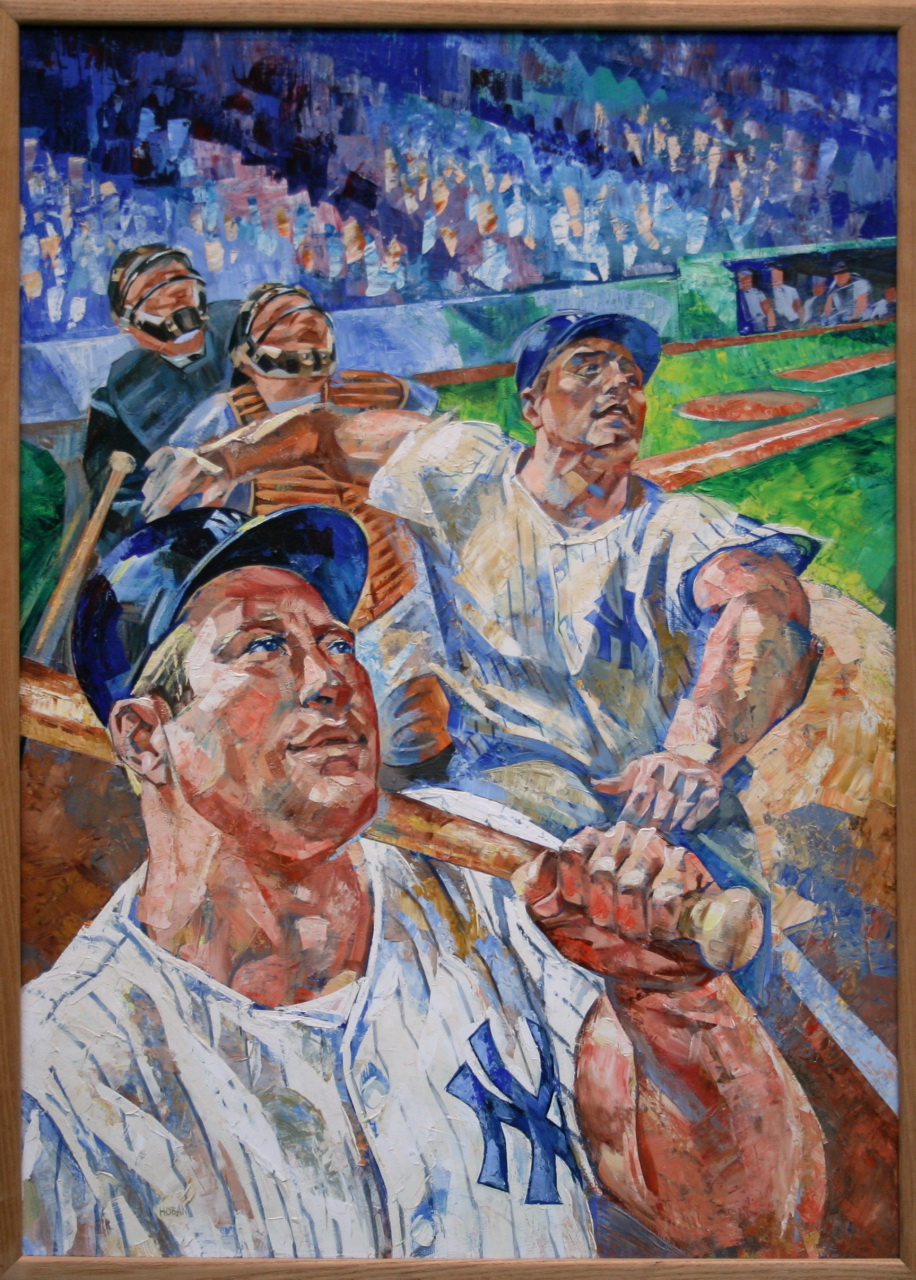
Mickey Mantle / Cliff1066 - Flickr
In 1950, a fleet 18-year-old shortstop from Oklahoma named Mickey Mantle captured the hearts of this Midwestern city, rallying the team that inhabited Miners Park on 4th and Main. Leading the Western League in almost every offensive category, Mantle batted an astounding .383 with 26 home runs.

Defensively, Mantle did not develop as quickly as his hitting, committing 55 errors in 137 games. Blessed with a strong arm and tremendous range, Mantle went through growing pains at one of the most demanding positions in baseball.

Teammate Cal Neeman, who would go on to a seven-year career in the big leagues as a catcher for five major league teams, knew very well Mantle was a star that needed just a little more polishing.

“Everybody knew he had a lot of talent. There is no doubt about that. He did some fabulous things, but he also made errors too,” Neeman said via a telephone interview Wednesday from his home in Missouri.

Steve Kraly, who pitched with Joplin that year and made it to the Yankees himself in 1953, also shared via telephone Wednesday tales of Mantle’s woes at shortstop.

“If there was an infield pop-up, we’d tell him to get out of the way! He had such a strong arm, when he threw to first, nobody sat in the box seats behind first base.”

Despite Mantle’s troubles in the field, there was no denying his prowess at the plate. Neeman, who had played at Joplin the year before, marveled at Mantle’s power.

“We had a fence in center field that was 420 feet. The first year I was there, nobody hit it over the fence during a game. One night in Joplin, Mickey hit one over it left-handed and right-handed. Incredible!”

Both Kraly and Neeman saw a tremendous change in Mantle’s play in between the 1949 and 1950 seasons. Prior to the start of the 1950 season, Casey Stengel held a training camp for Yankee prospects in Arizona. Neeman attended the camp along with Mantle in January that year.

“Mantle made his mark in a school that Stengel started for prospects in January of 1950 in Arizona. I was there too. In Phoenix, everything everyone knew about him was his power,” said Neeman. “He was left handed and hit it over the left field wall constantly. He’d go the other way right handed and there was no telling where he would hit it.”

Kraly provided the perspective of Mantle's transformation from playing with him during his debut year of 1949 at Class-D Independence.

“When he joined us in Independence, he came in the second month of the season. He weighed about 160 lbs. All he did was bunt and run,” Kraly remembered. “Harry Craft finally told him to start swinging the bat. Then he started swinging the bat and hitting the ball, [but] he didn’t hit too many home runs. The next year we went to spring training in Branson, Missouri with Joplin and you saw the difference in his physique from 1949 to 1950. That’s what you saw in the big leagues. He hit home runs over the light towers.”

During his time in Joplin, Mantle roomed with a trio of future big leaguers, Kraly, Lou Skizas and Bob Wiesler. The four were teammates the previous year in Independence. Kraly said that the experience living together in Joplin strengthened their bond.

“We enjoyed it and we had a lot of fun. We became like brothers, not just teammates,” Kraly said.

Reminiscing about their Hall of Fame teammate, also allowed both players to share their impressions of the devastated town.

“I had all positive memories about Joplin. It was the first placed that I played professional baseball. The whole atmosphere there was really good. People liked the ballplayers,” Neeman said.

He added that the community went out of their way to support the players.

“Some of those places would give us a free meal if you hit a double and things like that. It was just really pleasant.”

Kraly echoed Neeman’s feelings about the good-natured people of Joplin.

“I was shocked when I saw that on television. There are a lot of nice people there. It hurts to see a town get wiped out where I was able to play and meet the people there. If they released the names, I probably could remember some of them. The people were nice; they gave us gifts when we performed on the field.”

Over sixty years later, invoking the name of Joplin brought back pleasant memories for two of Mantle’s teammates, playing alongside one of baseball’s brightest rising stars during a more innocent time away from the spotlight that followed their teammate until his passing in 1995.

While Mantle’s spirit may not be able to fix the damage of this tragic disaster, hopefully the memory of his magical season in Joplin will make the day for residents a bit brighter than the last.

Monday, May 23, 2011

Wilber "Bullet" Rogan and the Kansas City Monarchs - Book Review

Imagine a player who many regard as a better pitcher than Satchel Paige and the equal of Joe DiMaggio at the plate and in the field. This isn’t the legend of Steve Nebraska, but that of Hall of Famer Wilber “Bullet” Rogan, who is so eloquently profiled by Phil S. Dixon in his book, “Wilber ‘Bullet’ Rogan and the Kansas City Monarchs.

Click here to read an entire review of the book.

Sunday, May 22, 2011

Doc and Straw share their thoughts on the 25th anniversary of the 1986 Mets World Series team

Twenty-five years ago, two of the New York Mets youngest and brightest stars shone brightly atop the pinnacle of baseball’s biggest stage, the 1986 World Series. Dwight Gooden and Darryl Strawberry, both were in their early twenties and had captured the attention of baseball fans not only in New York, but nationwide.

A quarter of a century later, their careers have taken many twists and turns which included multiple run-ins with the law for drug offenses that derailed their once potential Hall of Fame careers. Despite their transgressions, they remain beloved figures in New York sports history.


New York Mets legends Doc Gooden and Darryl Strawberry Headline Box NYC Premier Event

Anthony Mason (l) and Dwight Gooden (r) pose with a fan at BOX NYC
New York baseball heroes Darryl Strawberry and Dwight “Doc” Gooden were two of over 1,500 supporters who appeared at “Box NYC” at the Roseland Ballroom Thursday evening. The event which was put together by WCMG Events and Salita Promotions offered a mix of celebrity, charity, fine dining and boxing at one of Manhattan’s premier venues.

Dmitry Salita, the former WBA light welterweight champion, has now assumed the double duty as an active boxer and promoter. He discussed his outlook for the evening's proceedings.

“WCMG events did a fantastic job, making it a black-tie high class boxing event. Boxing is entertainment so it is very important to incorporate different kinds of entertainment into the boxing match. In addition to the boxing, we have sports celebrities, music and poker; it’s going to be a great night.”

Gooden, who is working on opening a baseball facility in New Jersey, was excited about a night filled with boxing.

“It's great to come out to watch boxing and hang out with the fans. My oldest son boxes in Golden Gloves in Florida, he loves the sport.

Strawberry, who now owns Strawberry's Bar and Grill in Douglaston, Queens, lent himself to the fundraising efforts for the Sophie Voice Foundation, a charity that assists children suffering from spina bifida. The foundation was founded by actor Boris Kodjoe and his wife, actrees Nicole Ari Parker, both of whom also helped to sponsor the event.

"We're not here for ourselves. We're here to show our support for a worthy cause," Strawberry said. "I think it's important to put your celebrity to good use.”

Former New York Knick John Starks piggybacked on Strawberry's statements about the charitable nature of the evening.

“It means a lot whenever you can use your celebrity status to help raise funds for Sophie Voice Foundation; it’s a great cause. I have a foundation of my own. It’s a natural thing as an athlete to give your time and efforts in order to help others,” said Starks, who works for the Knicks in their alumni relations department. “You have some great boxing and we’re going to raise a lot of money. That’s an important thing. I’ve been coming here for the last few years and we’ve received a good turnout."

Saturday, May 21, 2011

'Macho Man' Randy Savage's Baseball Teammate Tito Landrum Shares How They Chased MLB Stardom

Before there was a "Macho Man," Randy Savage was known better as Randy Poffo, an aspiring baseball player beating the bushes trying to get to the major leagues. Poffo was an outfielder, catcher, and first baseman in the St. Louis Cardinals and Cincinnati Reds organizations from 1971-1974.

The former WWF and WCW World Champion died tragically on Friday, May 20, 2011, in an auto accident in Florida. He was a beloved figure in the arena of professional wrestling, known for his trademark "Oooh yeah!" that he would exclaim during his colorful interviews.

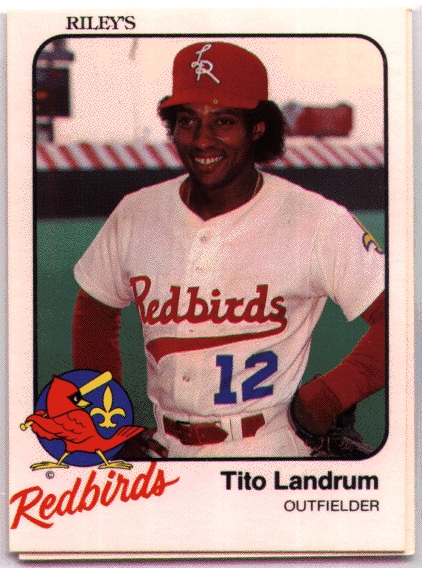
Tito Landrum & 1973 Orangeburg Cardinals Program
Playing for the Orangeburg Cardinals in 1973, the 20-year-old Savage was a teammate of a fresh faced rookie outfielder, Tito Landrum, playing together under the tutileage of Jimmy Piersall. Landrum enjoyed a nine-year career in the majors, winning a World Series with the Baltimore Orioles in 1983 and appeared in the 1985 World Series filling in brilliantly for an injured Vince Coleman.

Landrum, during an interview from his physical therapy practice Friday evening, recalled Poffo showing off his wrestling skills while he was still active as a ballplayer.

"We actually played a little bit in St. Petersburg and that's when I remember coming in the clubhouse and him making these mock rings," Landrum said. "He would get in there with some of the other players and they would do these little wrestling choreographed shows for us and it was always quite entertaining."

While Poffo wasn't a surefire prospect, Landrum remembered the same spirit that he displayed on the field that followed him into his long career as a wrestler.

"Randy was a very intense individual in baseball," he said. "I remember Randy being pretty good offensively and defensively. We just had some guys in front of him that he wasn't going to move anywhere. He didn't have the best athletic ability, but he certainly had the most qualified heart that I've ever seen. He just knew he was going to make it big somehow, someway. Of course he didn't make it in baseball, [but] he saw another avenue and he made it."

Landrum relayed another story about his travels with Poffo in the minor leagues. The two were roommates and would jokingly dispute about who owed for last month's rent.

"We actually roomed together in Orangeburg and every time we saw each other, we'd always in front of friends make a big deal about who owed who for the last month's rent," he recalled. "To be honest with you, right down to this day I couldn't tell you if I owed the last month's rent or he owed the last month's rent. I got moved up so I probably owed him, so we'd always make a joke of that."

Years later, Landrum had the opportunity to see Poffo perform at the peak of his wrestling career live and in person. There was one problem, Landrum didn't know of Poffo's Macho Man persona.

"Of course we moved on and all of a sudden one day I got this message to see him at a wrestling match," he said. "I was like, Who is this 'Macho Man?' I didnt know any 'Macho Man.' Then they told me it was Randy Poffo! I just had to go see Randy, so we hooked up there."

Watching Poffo as a professional in his second life as a wrestler left Landrum with wonderful memories of his former teammate. He relished the thought of Poffo's performances.

"Living here in New York I used to go and watch Raw," he said. "He'd leave me tickets and I'd go down there and I was always laughing. I'd tell him, 'I've got more teeth in my mouth than the entire front row Randy!' We had some great times."

Sunday, May 15, 2011

Brooklyn Dodger Ralph Branca holds spring fundraiser to benefit Sports Angels charity

Ralph Branca with author
Famed Brooklyn Dodger pitcher Ralph Branca proceeded over an evening of "casino and cocktails" to benefit the Sports Angels charity at Langan's Pub and Restaurant in Manhattan earlier this week. Branca is the vice-chairman of Sports Angels, which is a non-profit organization that works to create opportunities for youth sports participation.

Branca, now 85, has been able to use his baseball celebrity and business connections to create a network for Sports Angels that has allowed them to expand since their 2005 inception. "We use our spring fundraiser get our supporters together and create awareness about what we do," Branca said.
 
Click here to see photos and read more about the evening's fundraising efforts.

Monday, May 9, 2011

Duane Pillette, 88, teammate of Satchel Paige on St. Louis Browns

Duane “Dee” Pillette, an eight-year major league veteran pitcher died Friday May 6, 2011 in San Jose, California at the age of 88. Pillette broke into the majors with the New York Yankees in 1949, pitching until 1956 with the St. Louis Browns, Baltimore Orioles and Philadelphia Phillies. He compiled a 38-66 record, leading the American League in losses in 1951 for the cellar dwelling Browns.

Duane Pillette - 1954 Topps / Baseball-Almanac.com

Pillette was the son of former major league pitcher Herman Pillette, who spent four of his 26 professional seasons in the major leagues with the Reds and Tigers. The elder Pillette pitched until he was 48 in the Pacific Coast League.

Despite his father’s long career in baseball, the patriarch did not want his son to follow in his footsteps. In a 2009 interview that I conducted with Pillette from his home in San Jose, he discussed how his father wanted him to stay far away from baseball.

“My father never talked much about baseball except he didn't want me to play," Pillette recalled. "He fought me tooth and nail when I was a kid. Even though he didn't make much money in the Coast League, he sent me to Parochial schools. He never got past the sixth grade."

His father stressed the importance of getting an education ahead of playing baseball. As a youngster enthralled with the game, he was determined to move forward with the sport.

“He said, ‘I don't give a damn about baseball, you aren't going to make any money. I want you to get a good job and the only way is to get a good education,’” Pillette remembered.

He pleaded his case to his father. His father relented with one caveat, he had to be his de facto agent when scouts approached.

“I said, ‘You don't have any money and I don't have any money. I have to play baseball to get a scholarship.’ He said, ‘I'll let you play in high school, but if you have a scout come around, he has to talk to me.’”

Pillette did in fact get that scholarship, heading to the University of Santa Clara largely due to the involvement of an important Yankee scout.

“One Yankee scout, Joe Devine got me a scholarship at the University of Santa Clara," he said. "I pitched well in high school because I had a helluva ballclub. I don't think San Diego High ever lost a game in the three years I was there.”

Pillette signed with the Yankees in 1946 and immediately debuted with their top minor league ballclub, AAA Newark of the International League. While Pillette found himself playing with upstarts Yogi Berra and Bobby Brown, it was one of his opponents that made everyone take notice, Jackie Robinson. Robinson was playing for Montreal that season, on the verge of breaking the color line in the major leagues. Pillette was impressed with how Robinson handled the pressures of that season.

“A lot of guys were trying to nick him and scare him," he said. "He handled himself very well. I didn't have much trouble getting him out. He hit a lot of ground balls off of me amazingly enough. I'm not saying he took 0-4's against me, that's for sure. Jackie wore us out the first few games against us, he must have hit .600. He would bunt with nobody on with two outs, steal second base and [George] Selkirk would blow his lid.”

Pillette battled a groin injury he suffered late in the 1946 season through his next few campaigns in the minors. He played for Newark the following season and then was sent to the Portland Beavers of the PCL to work on his curveball with Tommy Bridges. He developed it well and posted a 14-11 record in 1948, which earned him a spring training invite with the Yankees in February of 1949. He was off to a great start in Florida and earned the confidence of manager Casey Stengel.

“I had a good spring and Casey had told the guys the last day before we broke camp that I was going to be the fifth starter and a long reliever,” he said.

Unfortunately for Pillette, General Manager George Weiss thought otherwise. Very quickly the tides turned for the young pitcher.

"George Weiss had other ideas. He said, ‘He needs to go back to Newark and learn some other things.’”

Pillette found himself in the familiar confines of Newark, but not for long. By mid-season, he was in the major leagues.

“I stayed there about a good month and a half, maybe more than that,” Pillette said. "I was in Syracuse when they called me over. I joined them in Cleveland at six-o'clock in the morning.”

Little did Pillette know that he would be summoned to pitch the first day he was with the team.

“I didn't figure I was going to do anything and Casey came out and gave the sinkerball sign," he recalled, "so I came in the ballgame. We scored a run on our half and went one run ahead. The very first hitter I pitched to hit a line drive at Cliff Mapes. He took a couple steps in and the ball went over his head for a triple and they tied up the ballgame. I ended up losing the ballgame, so I didn't scare anybody.”

Pillette was right; he didn’t scare off his coaching staff, as they had him start four days later.

“Jim Turner liked me a lot and Casey liked me so he started me four days later in Detroit," he said. "I pitched a day before my birthday in July. They scored two runs in the first inning and we lost the game 2-1. Then he started me in Yankee stadium against the White Sox, we went 0-0 for nine innings and Luke Appling hit a home run with a man on first base in the tenth inning and we came back in our half."

Luck, however, was not on his side. Despite his best efforts on the mound, the Yankees couldn't turn the tide to victory.

“[Joe] DiMaggio hit a line drive to right center and he very seldom got thrown out taking the extra base," Pillette said. "They threw him out at second trying to make a double and the ballgame was over. They scored two runs in the first inning off me, then they didn't score two runs until the 10th inning [the next game] and I pitched 17 consecutive innings without allowing a run and I'm 0-3. I'm the worst goddamn pitcher in the world!”

Pillette ended up 2-4 in 12 games that season and did not appear in the World Series for the Yankees in the postseason. He would pitch briefly with the Yankees again in 1950, and then was traded to the St. Louis Browns in a six-player deal. Even though he went from the top team in the American League to the worst, the trade gave him an opportunity to pitch full time. Pillette would be a key cog in the Browns rotation, pitching in 120 games from 1950-1953.

It was there in St. Louis where he would befriend another baseball immortal, Satchel Paige. 'Ol Satch pitched with the Browns from 1951-1953, giving Pillette plenty of time to get to know the ageless hurler.

“I enjoyed the guy. I admired him from all the things I heard about him," he said. "As far as I was concerned, when I saw him pitch and the things he'd do, this guy was absolutely amazing. He had the worst looking legs and everybody would tell you if you want to be a pitcher, you have to have a pair of legs. This guy had some spindles and I don't know how the hell he did what he did, but he was great."

They shared a special connection, as Paige was fond of his father from their battles barnstorming on the West Coast.

“My dad pitched against Satch in Los Angeles," he noted. "I know because Satch told me that he pitched against my father. Satch happened to play against my father in Los Angeles when he was in the winter leagues. My dad picked up extra money playing in the winter leagues. They became pretty good friends because they both had been around awhile. He said he was a fine man. He told me, ‘He didn't pitch like anybody I ever saw. He threw more soft stuff than you could believe but he had a pretty good fastball. You get two strikes on you and you might look for it. He said he never wasted any energy and probably about as smart of a pitcher as you ever saw.’ That’s probably why I got along with Satch so well, he liked my father a lot.”

After an arm injury ended Pillette’s career in 1960, he found success in the mobile home business.

“After I quit baseball, I got in the mobile home business for 32 years," he said. "I helped to build and manage this park. I've got a nice 1,800 square foot mobile home. If you came on the inside, you wouldn't think it was a mobile home. They don't make them like this anymore."

Pillette continued to stay active late in his life, gaining notoriety for his dancing. The notoriety wasn’t so much for his skills, but that he was one half of the oldest couple on the dance floor.

“On Friday and Saturday I dance with a lovely young lady that's 85, and I'm 86," he said. "We even got our picture in the paper because we are the only two whiteheads on the dance floor and they were curious. The people from the paper came in to the hotel for a party of people who were retiring. We get out there and do a little bit of a dance and this outfit took some pictures.

“The gal [Bev] who I take out was the bridesmaid at my wedding. About 10 years after her husband passed away, she called me one day and said that she wasn't sending anymore Christmas cards and she wanted to warn me. So we got to become good friends and she was a marvelous dancer. They got a hold of Bev and asked her some questions. They interviewed us at her home the next day. They showed the top part of us that we were dancing. A little story was written about it. We found a photo of Beverly in her album from my wedding and they put that in there too.”

Pillette returned to New York last summer as one of the seven living members from the 1950 World Series team. He was thrilled about his appearance at the new stadium.

"It was just wonderful being there surrounded by all of these greats," he said. "There aren't too many of us from that team left."

Even though Pillette fell below the .500 mark for his career, he was an All-Star to the fans, generously signing autographs through the mail and speaking to researchers and historians with such candor about his career. Somewhere in heaven, Pillette is having a meeting on the mound with his Paige and his father, conspiring how to retire the next batter.

Sunday, May 8, 2011

How Willie Mays inspired a Mets rookie teammate in his final campaign

George Theodore was a rookie left fielder for the New York Mets in 1973 when he found himself sharing the outfield with Willie Mays. The two were on the opposite ends of their respective careers; Mays playing in the last of his 22 Hall of Fame seasons, Theodore working to gain a toehold in the starting lineup. Returning to Flushing during Mays' 80th birthday weekend for a series of New York Mets Alumni Association events, Theodore said the Hall of Famer's presence on the field energized his teammates.

“Willie Mays had a magnetism that nobody had," Theodore said. "You could just feel it. He'd get up to hit and you kind of fed off the crowd. He was such a positive person; I was so happy to get to know him.”

George Theodore / N. Diunte
Ironically, Theodore's greatest memory playing alongside Mays was not the lessons learned on how to patrol the outfield, or watching Mays rekindle the spirit of the Polo Grounds, but a time when he was given an error on a play he shared with Mays.

Playing together in the outfield during the June 11, 1973 game against Mays' former team, a 400-foot smash was hit to left-center and both outfielders pursued it. Theodore described how the play unfolded.

Willie Mays / N. Diunte
“One game on national TV, I was in left field and he was in center," he said. "The ball was hit into left-center and I think I'll go get it because Willie couldn't throw too much at the time. He beats me there with his beautiful instincts [which were evident] even then, and he gets to the ball. He then tosses it to me for me to throw it, but I didn't know it was coming, so it dropped. I quickly picked up it and I threw it in. They gave me an error. I think they changed it subsequently, but that was the biggest honor I could have, taking that error from Willie Mays.”

Saturday, May 7, 2011

New York Mets partner up with Jillian Michaels to benefit Dress for Success

The New York Mets Alumni Association, presented by Citi, as part of their ongoing “Teammates in the Community” series, lent a hand Saturday in Battery Park to Dress for Success for their annual power walk fundraiser. Mets alumni John Franco, George “The Stork” Theodore and Mr. Met were on hand to help kick off the event, along with Dress for Success' official spokesperson, fitness guru Jillian Michaels. Over 500 participants on a beautiful day in New York City participated in the 5K walk to benefit the organization.

John Franco, George Theodore and Mr. Met jump start the event
Franco, the Mets career leader in saves, currently works as an ambassador for the Mets. He helped to rally the troops prior to the beginning of the race, encouraging the crowd to, “have fun and support all of the wonderful women that will benefit from today's event.”

Theodore, affectionately nicknamed “The Stork” for his tall and thin appearance, was also thrilled to be back in New York as part of the day's festivities. “To be a part of this event, which is such a worthy cause, it's great. It's energizing coming back to New York and just build my wife and my whole family's spirit.”

Dress for Success an international not-for-profit organization that provides professional attire to disadvantaged women to assist them in their employment seeking endeavors. For more information about Dress for Success, visit them online at DressforSuccess.org.

Wednesday, May 4, 2011

New York Mets alumni week appearances May 6-8

Former New York Met George Foster / N. Diunte
The New York Mets will be showcasing their alumni this weekend at events throughout the city including appearances at Citi Field. For this current home stand, Edgardo Alfonzo, Kevin Elster, George Foster, John Franco, Ed Hearn and George "The Stork" Theodore will all be involved in the festivities for what has been dubbed, "Mets Alumni Week."

Tuesday, May 3, 2011

Bill White: Uppity: My Untold Story About the Games People Play

Bill White, the former All-Star first baseman, National League president and New York Yankees broadcaster recently released his memoirs, Uppity: My Untold Story About the Games People Play. White speaks openly about his lengthy multi-faceted career in baseball and why he has distanced himself from the game. Click here to read the entire review of the book, as well as video of White speaking from his book signing in New Jersey.

Sunday, May 1, 2011

Emilio 'Millito' Navarro, 105, world's oldest living baseball player

Emilio "Millito" Navarro, the world's oldest living baseball player died April 30, 2011, at his home in Ponce, Puerto Rico. He was 105. Emilio 'Millito' Navarro, the Puerto Rican legend who played for the New York Cuban Stars in the Negro League from 1928-29, died Saturday in Ponce. He was 105.


The New York Yankees honored Navarro in 2008, selecting him in the ceremonial Negro Leagues draft. He was brought to Yankee Stadium where he threw out the ceremonial first pitch. Navarro's toss reached catcher Jorge Posada on the fly from 30 feet away. On the heels of his 103rd birthday, Navarro was astounded by the homage Yankees made.

"This is a dream for me," Navarro said. "I think I am in heaven."

Inducted into the Puerto Rican Baseball Hall of Fame in 1992, the second baseman was the first Puerto Rican to play in the Negro Leagues. Standing only 5'5", Navarro impressed with his quick bat, flashy hands and speed.

Navarro played for 20 seasons with the Ponce Lions in the Puerto Rican Winter League, as well as playing in Venezuela and the Dominican Republic. After his playing career was over, he was a physical education teacher and coach in Ponce and Caguas. Active past the age of 100, Navarro would often do exercises in public to demonstrate his fitness.

'Millito' gained notoriety in the past few years for being the world's oldest living professional baseball player. Topps honored Navarro in 2009 with an official baseball card in their Allen and Ginter set. In 2010, he was given the America's Outstanding Oldest Worker award from Experience Works.

Navarro is survived by four children, 11 grandchildren, nine great-grandchildren and one great-great-grandchild. His wife died more than two decades ago at age 62 from breast cancer.

Tuesday, April 26, 2011

Eddie Robinson goes to bat for his baseball family

Eddie Robinson, the 90-year-old All-Star first baseman who played for seven franchises during his 13 year major league career, saw one of his life-long crusades come to fruition with last week's agreement to extend pension payments to the group of MLB alumni that fell into the pension gap between 1947-1979.

Robinson appeared in New York for the announcement of payments to the MLB veterans. He spoke from his Fort Worth, Texas home about the excitement of his 20-year journey to get benefits for these retirees.

"I’m getting a pension and I’m happy, but it just didn’t seem fair," Robinson said. "I was in the group of the first player representatives that was formed, so I’ve had a great interest in what’s happened to players over the years, so when they dropped it back, I just didn’t think that was fair and I began to crusade to get something done about it."
Eddie Robinson / SMU Press

Fueled by recent media interest from Douglas Gladstone's book, "A Bitter Cup of Coffee," which spotlights the plight of many of the retirees caught in this pension gap, Major League Baseball was more receptive of a meeting with Robinson's group of alumni. A meeting at the MLB offices in New York City helped to make their cause clearer to baseball's top brass.

"Our services committee of the MLB players alumni became more active," he said. "We got a couple of players on our committee who were lacking in years to get a pension and they added a lot of exuberance and get go to our committee. We had a meeting in New York with Michael Weiner and Rob Manfred, and after that, I think they saw the seriousness of it and that something should be done."

The lack of parity in service time needed for a pension after the 1980 agreement ate at Robinson for the past thirty years, even more so in recent time as more alumni passed away. 

"The last year-and-a-half it’s been a real issue with us," he said. "It was so unfair to some players. Rich Hand, he just lacked a few days of having his four years and the reason he didn’t get those days was because there was a player’s strike. That robbed him of his pension. There were guys in World War II who had a year or two in the big leagues and when they came out they were too old or couldn’t win their job back. Even though they had their years, being in the service robbed them of getting a pension."

Robinson beamed with pride over the current agreement. While it isn't a true pension for those retirees, the annuity payments they will receive will not only help with their standard of living, but does something greater by validating their time as a major leaguer.

"Of course there are all of those guys in between who weren’t recognized and they couldn’t say, ‘I’m a big leaguer, I’m getting a pension.' This really authenticates it for those guys. That’s been one of my major goals since I’ve retired and fortunately I was able to achieve it."

Monday, April 25, 2011

Tony Oliva still on cloud nine about his baseball career

Legendary Minnesota Twins outfielder Tony Oliva recently made an appearance in New York City at a baseball card show. Oliva, who just had a statue dedicated to himself at Target Field on opening day, took some time to reflect on his 50 years with the organization.


Long after he has retired his glove and spikes, at age 72 Tony Oliva still dreams about his baseball career. Born in 1938 in Pinar del Rio, Cuba, Oliva went on to achieve major league stardom after humble beginnings growing up on the farm. As a young man, Oliva simply desired to follow in the footsteps of the Cubans that preceded him and play baseball. He never thought he would have experienced this journey.

“I still dream about everything I achieved. I dream about my career, dream about playing baseball, meeting so many people, traveling so much,” Oliva said. “Coming from where I came from, a poor family working in the country, to being able to come here and meet so many wonderful people. I had a chance to touch so many people's lives, visiting churches, schools, hospitals, and retirement homes. I never dreamed this would happen. I didn't plan it this way, but this is the way the big chief wanted it.”

Just a few weeks ago, Oliva had another dream come true when the Minnesota Twins unveiled a statue of his likeness outside of Gate Six on opening day at Target Field.

“Can you believe that? It's in Gate #6, which was my number. I tell people, you never know, from the farm in Cuba to having a statue of you in front of the big league stadium. It’s unbelievable,” Oliva glowingly said during a recent appearance in New York City.

Returning to New York for the first time in many years brought back vivid memories of playing in the city for the eight-time All-Star.

“I love New York. I love to come here, to play here, the tradition here. I'll never forget my first home run here was over Mickey Mantle's head. The ball went inside the monuments,” Oliva recalled. “For me to come to New York, it was unique. There were so many Hispanic people here in New York. They used to come over in right field to say hello. Some would scream to me because I did good here in New York. It was nice to be a part of the history here and play in front of all of these people.”

Brought to legendary scout “Papa” Joe Cambria by Roberto Fernandez Tapanes in 1960, Oliva made the journey from Cuba through Mexico to the United States to make his debut with Class-D Wytheville of the Appalachian League in 1961. Oliva tore through the league, batting an astounding .410, and after hitting .350 at Class-A Charlotte the following season, he was summoned to the major leagues for a late September call-up. He played 15 seasons for the Twins, winning three batting titles in the American League in addition to his aforementioned eight All-Star appearances.

Now working as a special assistant for the team, 2011 marks the 50th year that Oliva has been involved in the Twins organization as a player, coach, and administrator. He is still amazed that he is with the same team he started with a half-century ago. He expressed gratitude for the Twins ownership of the opportunities that he has received.

“Mr. Griffith for me was part of the family, like a second father," he said. "He did something for me that I will never forget. When I finished playing as a regular, he called me in and told me, ‘I want you to be in the organization as long as you want. I want you to be my hitting coach. How much do you want to make?’” Griffth asked Oliva. “I knew how much the coaches were making; the coaches don't make nothing. I told him, 'Give me what you think is the right amount.'"

Oliva was more than satisfied with Griffith's response.

"He paid me well; he gave me twice what the coaches were making. I didn't have to ask or beg him for a job, he offered it to me. He told me I could work here as long as I wanted. I thought it was nice of him to call me in and give me almost a lifetime job.”

As one of the proud faces of the franchise, Oliva has embraced his role as an ambassador for the club.

“I didn't believe something like this would happen to me. I've been with the organization for 50 years. I was supposed to be here only six months, 50 years later, I'm still here. I enjoy it more every day.”


Friday, April 22, 2011

Former MLB players react to new pension deal for payment to non-vested retirees

The cups of coffee for many retired players just got a bit sweeter: Major League Baseball announced Thursday in conjunction with the Major League Baseball Players Association an agreement to make annual payments to retired players who played before 1980 that did not have enough service time to qualify for a retirement benefit.

Since the 1980 season, all Major League players have vested as members of the benefit plan after just one day of service in the Major Leagues. Prior to 1980, players secured a pension benefit only after completing at least four years of Major League service. While these payments are not truly a pension for these retirees, it is income that will go a long way for many.

Author Doug Gladstone illuminated the plight of the 874 retirees that fell into the pension gap with his 2010 book “A Bitter Cup of Coffee.” In the book he details the struggle of the many veterans who have worked tirelessly to get the powers in baseball to change their stance on this issue of pension benefits. All of these alumni paid into the pension fund without receiving anything in return while MLB made record profits. All they wanted was a piece of what they helped to start.


“We don't live in a perfect world, and this is far from a perfect solution to this problem," Gladstone said in a release on Thursday. "What was announced today doesn't provide health insurance coverage, nor will any player's spouse or loved one receive a designated beneficiary payment after the man passes.”

While the arrangements may not be ideal for Gladstone, he does acknowledge that the men that he advocated for will be receiving payments for their service.

"However, I am elated that these men are at long last finally going to be compensated for their service and contributions to the national pastime. This was a wrong that should have been righted years ago.”

Steve Grilli / Youtube

Steve Grilli, a pitcher for the Detroit Tigers and Toronto Blue Jays from 1975-1979 is one of the younger players included in this agreement. At the age of 61, he missed the full pension by one game. He was on the 40-man roster for the entire 1980 season with the Blue Jays. Unfortunately for Grilli, his phone never rang.

“I wasn’t getting rich playing ball," said Grilli during a phone interview Friday evening. "I drove a UPS truck in between seasons. I just wanted baseball to do the right thing. That’s been my mantra throughout all of this.

"I’m not going to say they did the right thing; they did something. I’m very sympathetic for the guys that passed on that didn’t get at shot at this. They’re making the gesture of giving us the same thing they gave the Negro Leaguers a few years back. It shows you they made a mistake. If they offered it to them, why wait all this time to do it for us?”

Grilli feels that this offer from MLB and the MLBPA is an appeal to get the retirees away from the bargaining table.

“There was a dam with a hole in it which was us; that was the problem," he said. "I think they just put their finger in it to hold it off and didn’t permanently fix it. I’m more appeased than satisfied. Let’s just give them this and they’ll go away. Should I die tomorrow, my wife isn’t going to get the small amount that I will be getting."

Alumni from the New York area teams that fell into this pension gap were pleased to hear that they will finally be compensated for their years of service. Former New York Yankee pitcher Johnny James, who pitched from 1958-1961, was excited to hear the news.

“About two months ago, Eli Grba had sent me an article from the Chicago papers that they were talking about it," James said from his Arizona home. "It's exciting to think about because it's just nice. I don't expect it to be a lot, but the fact that it is something, is very nice. I knew what the deal was when I played and the fact that I didn't play long enough wasn't Major League Baseball's fault, it was mine. I will admit when I saw the article, it gave me a good feeling.”

Former Brooklyn Dodger and New York Yankee pitcher Fred Kipp, whose ten year career yielded stints in the big leagues from 1957-1960, echoed similar sentiments.

“We can use it.," Kipp said. "I'm not destitute. I played about a year and a half in the majors and about 10 years in pro ball. I'm not bitter or anything. That was the rule, you had to have five years."

Fortunately for the 79-year-old Kipp, he had a construction business for 40 years that provided support for his family after baseball.

Playing for the New York Mets from 1973-1974, George “The Stork” Theodore was a favorite in many Queens households. Now living in Salt Lake City, Utah, Theodore shared his appreciation for the work that Gladstone performed to promote the cause.

“I know Doug Gladstone has been our greatest ally in this with his book A Bitter Cup of Coffee," Theodore said. "I think it is wonderful. Like I said, he's been fighting for us for quite a while and I know about four or five other players in the Utah area that are in the same boat as me. We're appreciative and it will be a nice help.”

With praise from players like Theodore, Gladstone is glad that his work did not fall on deaf ears.

“My sole purpose in writing this book was to do right by the boyhood heroes of my youth, who gave me numerous hours of enjoyment and pleasure while growing up. If in some small way my book helped bring this issue to light, I couldn't be more pleased."

Wednesday, April 20, 2011

Follow Baseball Happenings on Twtitter

Follow ExamineBaseball on Twitter
Now you can follow the writings of Baseball Happenings as well as my other site for Examiner.com via Twitter. Click on the link on this page or on the right menu bar to follow on Twitter. I hope that this will increase the level of interactivity on this site between the readers and myself.

So long Brad Emaus

Brad Emaus / Xyku / Flickr
The Brad Emaus experiment lasted 42 at-bats. The Mets announced yesterday that they were designating the second baseman for assignment. They recalled Justin Turner from AAA Buffalo. As part of his waiver, the Mets have to offer Emaus back to the Toronto Blue Jays for $25,000, half of his draft fee.

Emaus looked overmatched by major league pitching, batting a lithe .162 during his tenure. Mets general manager Sandy Alderson justified Emaus' brief trial in Flushing. "We just decided that based on what we'd seen in spring training and what we'd seen so far this season, that we'd given it enough time."

Tuesday, April 19, 2011

Stanley Glenn, 84, Negro League catcher and president

Stanley "Doc" Glenn, a catcher with the Philadelphia Stars of the Negro Leagues died Saturday, April 16, 2011 due to natural causes at his home in Yeadon, Pennsylvania. He was 84.
Born Sept 19, 1926 in Wachatreague, VA, Glenn was a star at John Bartram High School in Philadelphia where he quickly drew the attention of the Stars Hall of Fame player / manager Oscar Charleston. Charleston signed him off of the sandlots in 1944 shortly after graduating from high school. Within a week of graduating, he was making $175 per month playing in the Negro Leagues.
Stanley Glenn (r.) at 2007 Judy Johnson Night / N. Diunte
Glenn played with the Stars through 1950, facing the likes of countless Hall of Famers in the Negro Leagues including: Josh Gibson, Satchel Paige, Monte Irvin, Ray Dandridge, Roy Campanella, Hilton Smith, and Willard Brown. He expertly detailed his recollections of not only his career, but of all of the greats he encountered in the Negro Leagues team-by-team in his 2006 autobiography entitled, "Don't Let Anyone Take Your Joy Away: An Inside Look at Negro League Baseball and Its Legacy."
His career, like many ballplayers at the time, was interrupted by World War II. He served as a technician in the Army Medical Corps during from September 1945 through November 1946, taking time off to play with the Stars when the opportunity presented itself. Upon his return from military service, he earned the nickname "Doc" for his physical therapy work performed during the war.
Glenn as a member of the Philly Stars
After Jackie Robinson's signing with the Brooklyn Dodger organization, many teams saw their top talent raided by major league organizations looking for the next baseball superstar. During the 1950 season, the hands of the Boston Braves scout Honey Russell reached down and signed Glenn to their Class-A affiliate in Hartford. As a catcher in the Braves organization, he faced stiff competition from the likes of Walker Cooper and Del Crandall. Nonetheless, Glenn played four seasons with Braves minor league outfits in Quebec, Lincoln, as well as Hartford before moving on to a career in the electrical supply business.
Glenn's Hartford teammate Gene Conley, who would go on to win championships in both MLB (Milwaukee Braves) and the NBA (Boston Celtics), was in his first year in pro ball when he pitched a game with Glenn as his catcher. Conley's performance that night was reminiscent of another lanky Negro League hurler.
"Stanley was my catcher the first season I played in A-ball," Conley recalled in a 2008 interview. "I liked him. I pitched a lot to him. I won my 20th game against Wilkes Barre. He was behind the plate when they gave me a night in Hartford. It was Gene Conley night. I pitched a shutout and beat Wilkes Barre 2-0 that night. After the last out, Stanley comes running out to the mound. Remember Podres jumping into Campanella's arms? He jumped up on me and said, 'I love you like a brother. You reminded me of Satch tonight!' He used to catch ol' Satch. I'll never forget that. It was a warm feeling. It was a good thing that he did; it made me feel good. The whole thing was nice. It was my 20th win, they gave me a night, and Stanley came out there and grabbed me. I tell people my first catcher told me I reminded him of Satchel Paige!"
Later in life with the resurgence of interest in the Negro Leagues, Glenn took the position as the president of the Negro League Baseball Players Association. He advocated for the rights of many of the former players and helped to create opportunities for them to share in the profits that many companies were making off of the renewed interest in the former league. He was a fixture at many events in the Philadelphia area, generously appearing to spread the word about the league and its history. 
Stanley Glenn Negro League Art Card / Author's Collection
Glenn was ceremoniously given his first baseball card by the Topps Company in 2007, when he was included in their Allen and Ginter set. His inclusion in the set opened up his career to a new generation of fans and collectors alike. He received a tremendous amount of fan mail after the printing of the card with requests for his signature and information on his career.
Mr. Glenn often appeared at the Delaware Blue Rocks annual Judy Johnson Tribute Night, where he graciously signed autographs and spoke about the history of Negro League baseball for many hours throughout the ballgame, often giving fans his home phone number to contact him with their questions. He was honored by the club in 2008 with special artwork bearing his image that was given to fans entering the stadium that evening. His passing dims another beacon that was able to illuminate the rich history of the Negro Leagues.
2010 Judy Johnson Tribute Night

Wednesday, April 13, 2011

Eddie Joost, 94, last manager of the Philadelphia Athletics dies

Two-time All-Star shortstop and the last manager of the Philadelphia Athletics franchise Eddie Joost passed away Tuesday in Fair Oaks, CA. He was 94.

Joost began his major league career in 1936 with the Cincinnati Reds after starting only three seasons prior with the San Francisco Missions of the Pacific Coast League. Quickly disregarded by manager Charlie Dressen, who said Joost, "will never be a major league player," he became the starting second baseman for the Reds when they won the World Series in 1940.

Eddie Joost with the author @ Philadelphia Athletics Historical Society 8/2008
After his World Series victory, his career was derailed as he committed 45 errors at shortstop for the next two consecutive seasons. Joost was jettisoned to the Boston Braves in 1943 where he hit .185 in 496 at-bats. He skipped the 1944 season to work for a meat packer that was an essential service to the war efforts. Returning to Boston in 1945 rested and refreshed, Joost was off to a strong start when his wrist was broken by Billy Jurges sliding into second base.

The Braves suspended Joost after they claimed he deserted the club once they let him go home following his injury. With his career stalled on the suspended list, Joost thought his days were over. Rescued by the Rochester Red Wings of the AAA International League, Joost flourished. In 1946, he had career highs in home runs and RBIs. This tremendous showing piqued the interest of the legendary Connie Mack.

The 84-year-old Mack was looking for a shortstop after a dismal finish to the 1946 season. When Mack contacted Joost, he reassured the veteran that he wasn't concerned with his rocky past.

"You can play. That's all I care about," Mack said.

Nineteen-forty-seven began a eight-year stay with the Athletics where Joost earned MVP considerations five times along with two All-Star selections. Between 1947 and 1952, Joost slugged 109 home runs, while walking over 100 times in each of the six seasons.

At the end of the 1953 season with Joost now 37 and the Athletics in financial disarray, he was offered the position of player-manager in a cost-cutting move. Once again, Joost was unsure of his abilities. New to managing, Joost expressed his concerns to Mr. Mack. Mack reassured his faith in Joost.

"You've been a great player for me," Mack said. "I know you'll do well."

The Athletics, who had only one starter that hit over .300 that season, finished in last place in the American League with 103 losses. When the Athletics moved to Kansas City following the 1954 season, Joost was not asked to go west with the team.

Seeking a large bonus to continue his career, Joost signed with the Boston Red Sox for $10,000 in 1955. Joost suffered a broken hand early in the season and never effectively recovered to regain his old form. He briefly managed in the Red Sox farm system the following season with the San Francisco Seals, but quit the team quickly when he was turned off by the individualistic nature of their young bonus players.

"They were all individual players, all great, but we kept losing. I quit, and walked away from baseball," Joost said.

After his baseball career had ended, Joost moved to Hawaii, where he worked for Wilson Sporting Goods before retiring. I had the opportunity to meet Joost in 2008 (pictured above) at the Philadelphia Athletics Historical Society Museum. Joost was a frequent supporter of the society and at the time was extremely lucid and pleasant. I was impressed by the vigor and firm handshake he displayed at the age of 92 that represented a man much younger than his years. It was this youthful spirit he exuded that kept him going much longer when many others would have perished.

More Info -
Big-leaguer Eddie Joost dies at 94 - SFGate.com
Eddie Joost recalls how Connie Mack revived his big league career - Baseball Digest
Baseball History Podcast: Eddie Joost - Baseball History Podcast

Monday, April 11, 2011

Eddie Robinson: "Lucky Me: My Sixty-Five Years in Baseball"

Anyone who is involved in the game of professional baseball for sixty-five years is more than lucky; they’re blessed. Eddie Robinson, now 90, recounts his lengthy career as a player, coach and executive in his autobiography, “Lucky Me: My Sixty-Five Years in Baseball,” which is currently available via SMU Press.

Eddie Robinson - Lucky Me / SMU Press
Robinson, along with help from co-author C. Paul Rogers III, speaks eloquently about his six-plus decades in baseball. Growing up in Paris, TX, Robinson had his start from humble beginnings in the farming community during the Great Depression. Signed into professional ball in 1939, he began a career that saw Robinson make stops with seven different American League ball clubs from 1942-1957, as well as three years of World War II Service that almost stopped his playing days dead in its tracks.

Recovering from a botched surgery to remove a bone tumor during World War II, Robinson endured a long and hard road to return to baseball in 1946. Not only did Robinson come back, he excelled. Robinson had a banner year that season, winning the MVP of the Triple-A International League, beating out an upstart Jackie Robinson, who was on his quest to make baseball history. This wouldn’t be the first time that the Indians farmhand would have a brush with baseball’s integration, as he was involved in some controversy surrounding the debut of Larry Doby the following season.

Robinson was the only right-handed first baseman on the club, and was asked to defer to Doby by lending the rookie his glove to play the position. Only days before, manager Lou Boudreau has assured Robinson that he was the team’s primary first baseman. A flummoxed Robinson threatened to quit after lending Doby his glove; however, he explained his reasoning was not due to Doby’s race.

“I threatened to quit because of my anger at Boudreau, not because he was a black guy coming in,” he said.

After winning the World Series with the Indians in 1948, he was traded to the Washington Senators for Mickey Vernon. This would begin the merry-go-round that would see him visit seven teams in the next nine seasons. It is through these travels where the book takes shape.

Robinson adds colorful tidbits about his career at the end of extra chapter entitled, “Extra Innings,” which are anecdotes that enliven the stories of his career. Through his play with seven different franchises, Robinson details many innings that illustrate the depth of his career. Robinson has a story for seemingly every “name” player from the 1940s and 1950s and tells them in a manner that keeps the pages turning.

For the New York fans, Robinson expertly details his time as a member of the New York Yankees from 1954-56, where he helped man first base under Casey Stengel’s platoon. Robinson would later return to the Yankees in the early 1980s as a scout.

While not a Hall of Famer, Robinson merits a lot of credit for his long relationship with the national pastime. Whether it was as a player, coach or executive, Robinson put his best foot forward and reaped the rewards of a long-time association with the sport. “Lucky Me,” allows the reader to ride along with Robinson through his sixty years in baseball, taking in the scenery every stop of the way.

Sunday, April 3, 2011

Bill White | The Making Behind His Book 'Uppity'

Former New York Yankees broadcaster Bill White made an appearance this Saturday at Bookends in Ridgewood, New Jersey to promote his memoir, Uppity: My Untold Story of the Games People Play. Legions of Yankee fans are familiar with White only from his work in the broadcast booth alongside Phil Rizzuto; however, White was a pioneer in baseball, a member of a select group of African-American players to debut in the 1950s. He endured racial taunts and the laws of Jim Crow segregation to achieve a celebrated 13-year major league career with the Giants, Cardinals, and Phillies.

Bill White signing copies of his book Uppity / N. Diunte

White attempted to redirect all of the negativity he faced from the fans and the opposition into his output on the field. He explained how he turned the racial epithets hurled at him as the only African-American player in the Carolina League in 1953 into fuel against the opposing pitchers.

"I was the lone African-American in the entire league," White recalled. "We played in Raleigh, Greensboro, and Durham. All of the teams were in the South. After I got down there and I figured out what I was going through, I'd rather I played someplace else, but I stayed there, overcame that, and it made me play harder. I hit almost .300 and drove in close to 100 runs. I think that what I went through, back to what my mother and grandmother taught me, it helped me do better. I took it out on the baseball."

Between 1956 and 1969, White was named to the All-Star team five times, won six Gold Gloves and a World Series ring with the St. Louis Cardinals in 1964. White then spent 18 seasons doing commentary for Yankees games from 1971-1988 before being named President of the National League in 1989. At the time, White was the highest ranking African-American in professional sports.

After his five-year tenure presiding over the National League, White washed his hands with baseball after a 40-year career as a player, broadcaster and executive. He became a recluse, staying far away from the spotlight of the media. Asked if he currently follows the major leagues, he responded with a resounding, “No.” So at 77, then why did he choose such a public display of his career?

"I think that there are a lot of young kids, not necessarily minorities that gotta realize they can do whatever they want to do if they work hard enough," he said. "It doesn't make much difference where you come from. I grew up in the South in a steel mill town. I took advantage of whatever opportunities were given to me. I had parents who said, ‘Hey you're going to get an education, you are somebody, you've gotta work twice as hard as the people you are competing with to be successful, so go out and do it.’ That's the way I've worked all my life and the way I've done things all my life. That’s why I wrote the book."

White’s title Uppity, which represented the then-white view of the educated, high-achieving blacks, stemmed from a comment he heard from Giants’ executive Chub Feeney.

"When I came out of the Army, two years later Orlando Cepeda was Rookie of the Year," he recalled. "Right behind him was Willie McCovey. I said to management, ‘Find me some place to play,’ and the GM said, 'Bill, you're too uppity.'"

At that time, the executives did not care for players giving them orders to be traded, especially from those that were black. White later received his wish, being traded to the St. Louis Cardinals in 1959. It is there where his career flourished, beginning a string of five All-Star appearances in six seasons.

White, who spends much of his time traveling in his mobile home, reflected on the return to where his big league career began in 1956. It was an awe struck experience that has stayed close to him for over 50 years.

"Like any other young player, I was star struck playing with guys like Willie Mays and Alvin Dark," he said. "I lived right above the Polo Grounds and I walked to work. As a kid coming from a small town, I didn't really get a chance to see the great things in New York, the Statue of Liberty, plays, and museums. I didn't get a chance to see those things and I missed them."

Saturday, March 26, 2011

Brad Emaus and the history of the Mets Rule 5 draft

Brad Emaus
With signs pointing to Brad Emaus earning the nod for the second base position with the New York Mets this spring, click here to take a look at Emaus' career and the Mets recent history with their results in the Rule 5 draft.

Wednesday, March 16, 2011

Spook Jacobs: 'He's worth $30,000 in the minor leagues!'

Former Brooklyn Dodgers General Manager Branch Rickey scoffed at the possibility of losing fomer farmhand Spook Jacobs to another franchise. Jacobs was signed by the Dodgers in 1946 and quickly ascended the ranks of Brooklyn’s farm system, moving from Class-D Thomasville to Class-AA Mobile by 1949. After batting .304 for Mobile in 1950, the White Sox made a run for Jacobs.
Spook Jacobs / 1955 Topps
The recently deceased Jacobs discussed in a 2009 interview how Rickey would not sell Jacobs to the White Sox even though he was blocked at the major league level by Jackie Robinson.

“If you are behind Jackie Robinson, you don’t have much of a chance,” Jacobs lamented. “We had 28 farm teams; that’s 28 other second baseman and with two in the big leagues, that’s 30 second baseman. You don’t have much of a chance when they won’t let you go and you have to stay. The White Sox offered $30,000 for me and Branch Rickey said, ‘He’s worth that much in the minor leagues!’ Unbelievable!”

Bound by the reserve clause, there wasn’t much Jacobs could do except continue to play hard and hope for an injury at the big league level or a trade. After the 1953 season, the Dodgers left Jacobs unprotected and the Philadelphia A’s drafted him in what we now know as the Rule 5 draft. Jacobs started at second base for A’s the entire 1954 season, and continued with them for parts of the 1955 and 1956 seasons before being traded during the 1956 season to Pittsburgh where he appeared with them for 11 games. He finished with a career .247 batting average in 188 games played.

Marty Marion, former National League MVP, dies at 93

Marty Marion
Marty Marion, the 1944 National League MVP, nicknamed "The Octopus" for his tall build and long arms, died Tuesday night from natural causes. He was 93.

At 6'2" in height, Marion revolutionized the shortstop position when it was known primarily as a place for short and speedy defenders. His range and soft hands were his trademark, helping to pave the way for other tall shortstops such as Cal Ripken Jr., Derek Jeter and Alex Rodriguez.

Marion was voted MVP of the National League in 1944, leading the St. Louis Cardinals to the World Series pennant. He would play 11 seasons for the Cardinals from 1940-50 and then two additional seasons as a player-manager for the St. Louis Browns from 1952-53.

As a manger, Marion managed the Cardinals in 1951 and then replaced Rogers Hornsby as manager of the Browns in 1952. He took over the reigns of the Chicago White Sox ballclub late in the 1954 season and managed them through the end of the 1956 season.

Marion received as high of 40% of the Hall of Fame vote when he was eligible. In later years, he received support from the Veterans Committee. Hall of Famer Tommy Lasorda put Marion in the same class as two other Hall of Fame shortstops, stating, "He was an outstanding shortstop for the Cardinals on the same level as Phil Rizzuto and Pee Wee Reese."